Yap-Japan Cultural Exchange Program was held by Ecoplus from March 7 to 18, 2026, with a 10-day stay on the island. The participants included six female and two male university students. Due to the impact of Typhoon No. 3 (international name Nuri), which formed near Yap Island, the first half of the program involved setting up our living space and learning local life skills amidst heavy rain and wind. As the weather improved in the latter half, students were able to deepen their relationships with the local community.
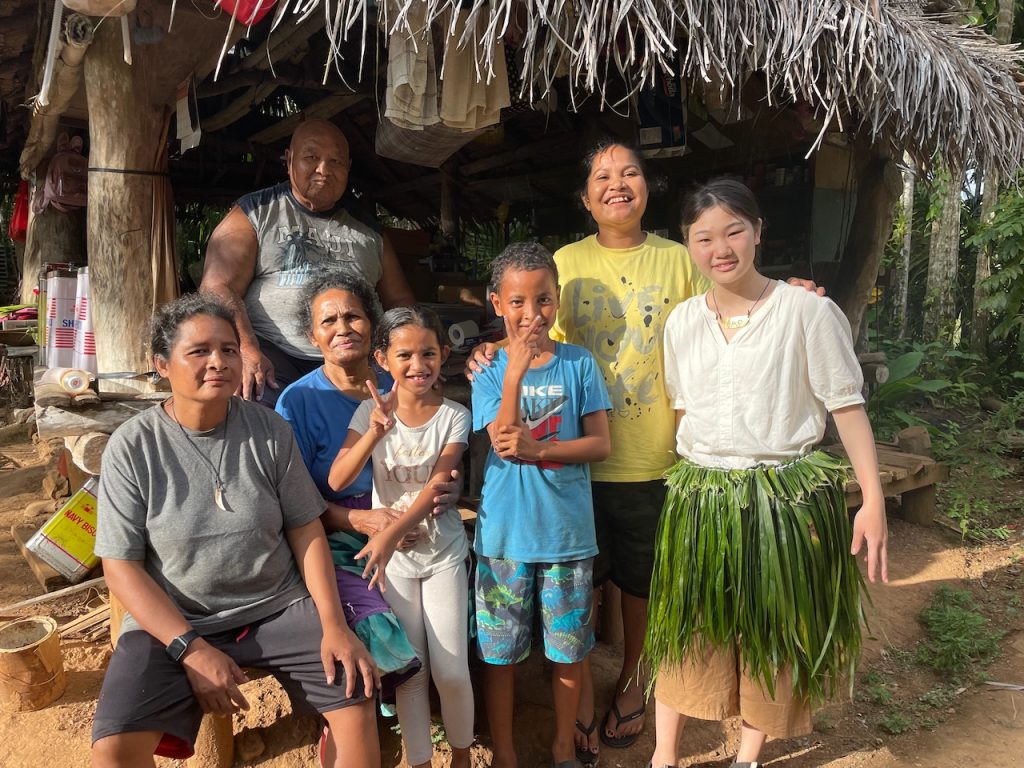
We stayed in the Maap Community on the northern side of Yap Island. This is a place of fond memories, as it was where we held the first students program in 1992. Tim Moon, who coordinated the first program and was a member of the Department of Education at the time, lived right behind the women’s house that served as our base. Additionally, the children and grandchildren of the elders, Gaayan and Dukchul, who had supported us wholeheartedly since the very first program came one after another to look after us. For TAKANO Takako, Representative Director of Ecoplus, and OHMAE Junichi, Director—who have continued the program for over 30 years—this was a particularly special experience.
長老のラマンさん(左)からお話を聞く。ラマンさんは、過去お世話になったガアヤンさんの長男。Students listen to Elder Raman (left). Raman is the eldest son of Gaayan, who helped us in the past.
The participants stayed at the women’s house in Wonnet Village, a concrete building. At first, a few participants slept inside, but they found it more comfortable to sleep on the breezy patio. They then discovered that the traditional thatched-roof huts on the ocean side were even more comfortable, so half of them decided to sleep there. They were able to rest comfortably, sheltered from the rain.
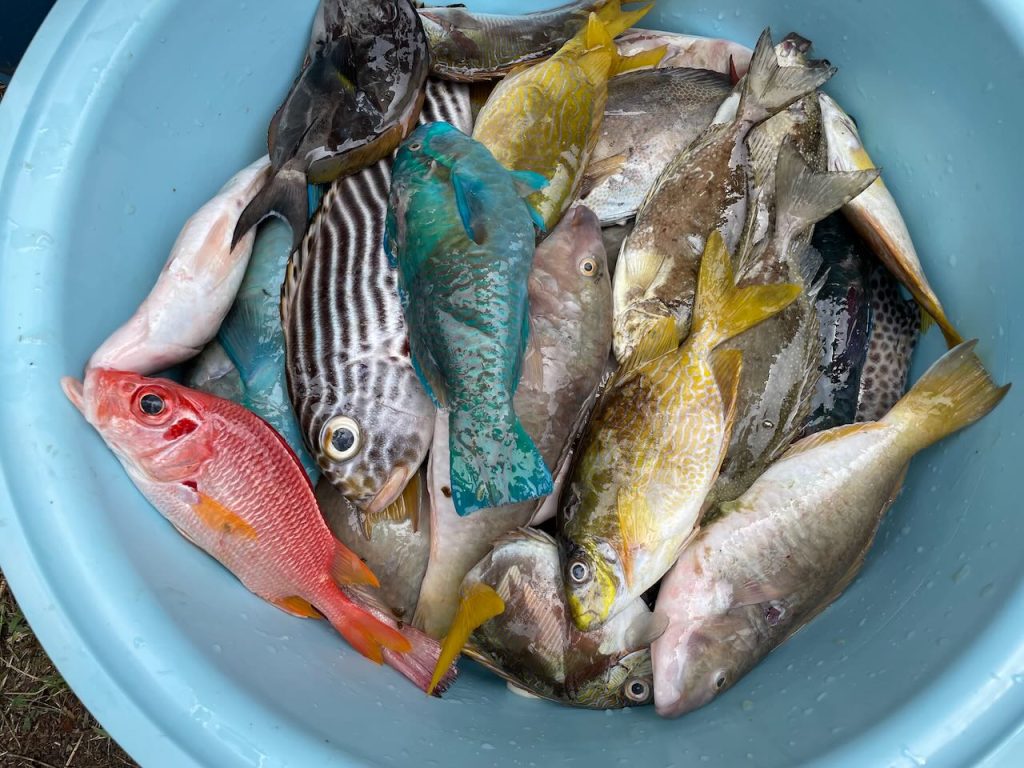
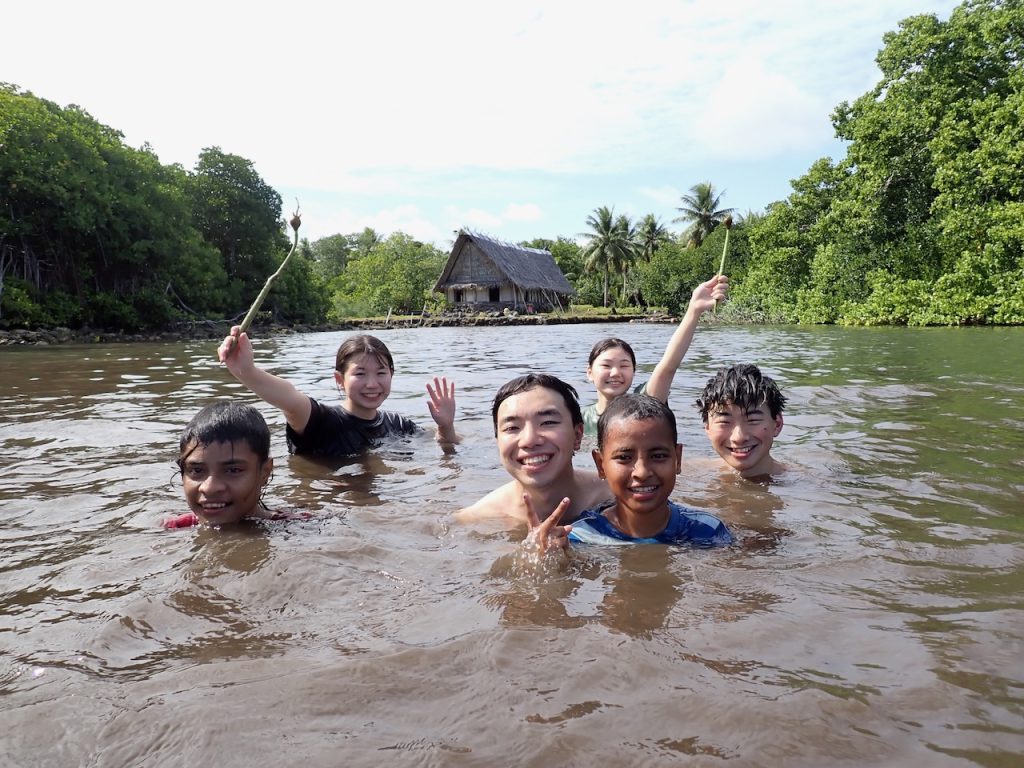
We had asked the locals if they could share some fish and taro with us, and suddenly, they invited us to the sea. A net had been set in a spot where the water was only knee-deep at low tide, and when we searched the net, we found plenty of fish larger than the palm of our hands. Furthermore, fish had strayed into the seaweed beds that were beginning to dry out, leading to a scene where we chased the fish like a game of tag.
Furthermore, Chigei, who lives in front of the women’s house, appeared carrying fish—including a barracuda with sharp teeth over a meter long—from the sea and generously shared them with us.
いただいたバラクーダ。ラグーンの中でのトローリングで獲ってきたとのこと。A barracuda Chigei caught. He told us he caught it trawling in the lagoon.
We were also invited to a field on the land side to harvest taro. The leaves resemble those of Japanese small taro, but they had grown to a height far exceeding our own, providing enough shelter to withstand the heavy rain.
The coastline facing east has been hit by fierce waves due to rising sea levels. According to the elder, Raman, over the past 10 to 20 years, the coastline has shifted by several dozen meters, and about three rows of palm trees have been swept into the sea. During the major typhoon in 2004, waves crashed around the houses, eroding the foundations of even the concrete homes and washing the house away.
It was a program that also confronted us with harsh realities. The participants who have returned home are compiling their reflections and reports, and we will hold a debriefing session on Saturday afternoon, July 11. Details will be announced on this website at a later date.
A presenttion session for the Yap-Japan Cultural Exchange Program, conducted in March 2025, was held on the afternoon of July 5 in Chiyoda Ward, Tokyo. The session by the seven participants of the program, was attended by over 20 people, including family members, friends, and member of ECOPLUS, with some others watching online.
The meeting began with each participant presenting the daily activities of the 11-day stay on the island. They shared experiences such as arriving in Yap in the very early morning, resting briefly on the floor of school library, building toilets and showers together with villagers, digging up taro, the main staple food, and being surprised by the huge leaves of taros, grinding the coconut meat to make coconut milk for cooking, and being amazed by the countless fish in the crystal-clear waters in the lagoon. These vivid accounts of daily life were accompanied by photos.
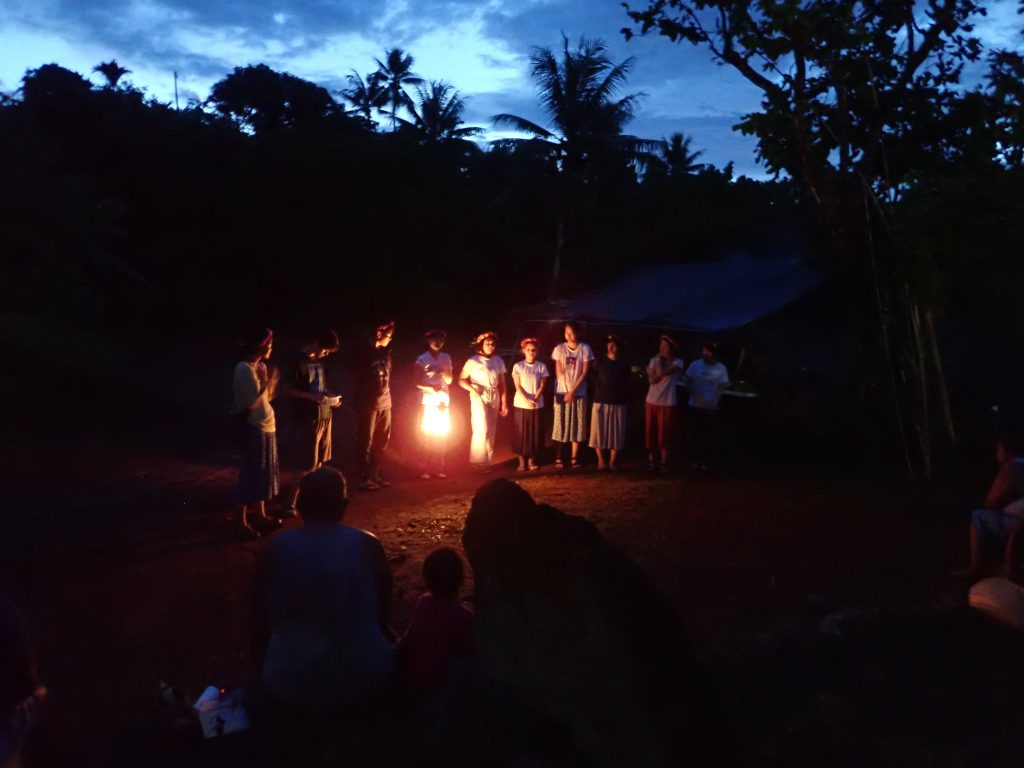
Next, each participant shared their feelings about the program. One participant, who had previously been so obsessed with cleanliness that he couldn’t even sit on the airport floor, shared how he came to sit on the ground on Yap Island, surrounding a small lantern, to eat meals. Another shared how, even after returning to Japan, he couldn’t help but recognize the round objects they saw as the stone money in Yap. The participants spoke with big smiles on their faces, and the venue was filled with warm laughter.
This program started in 1992, but was cancelled in 2000 due to the COVID-19, and this time we were finally able to conduct the program after 4 years. Since it had been a long time since this program was held, the number of participants and the schedule were kept low. One of the expected participants fell ill on the morning of our departure, so we ended up with a total of five participants (four university students and one high school student) who stayed on the island for seven days.
We stayed in the village of Aff, located in the Tamil community of Yap Island. The village has well-preserved traditions, such as well-maintained stone paths.
Our base of operations was the village meeting hall. It is a one-story building made of new concrete. We began by building a cooking hut and shower house in the back.
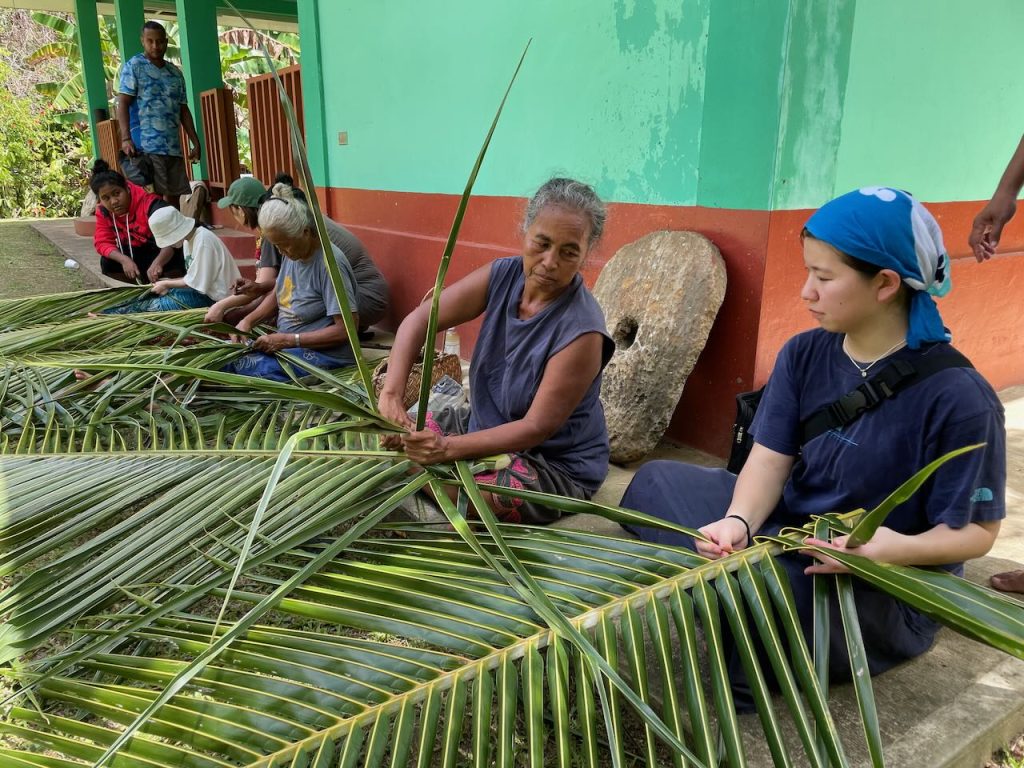
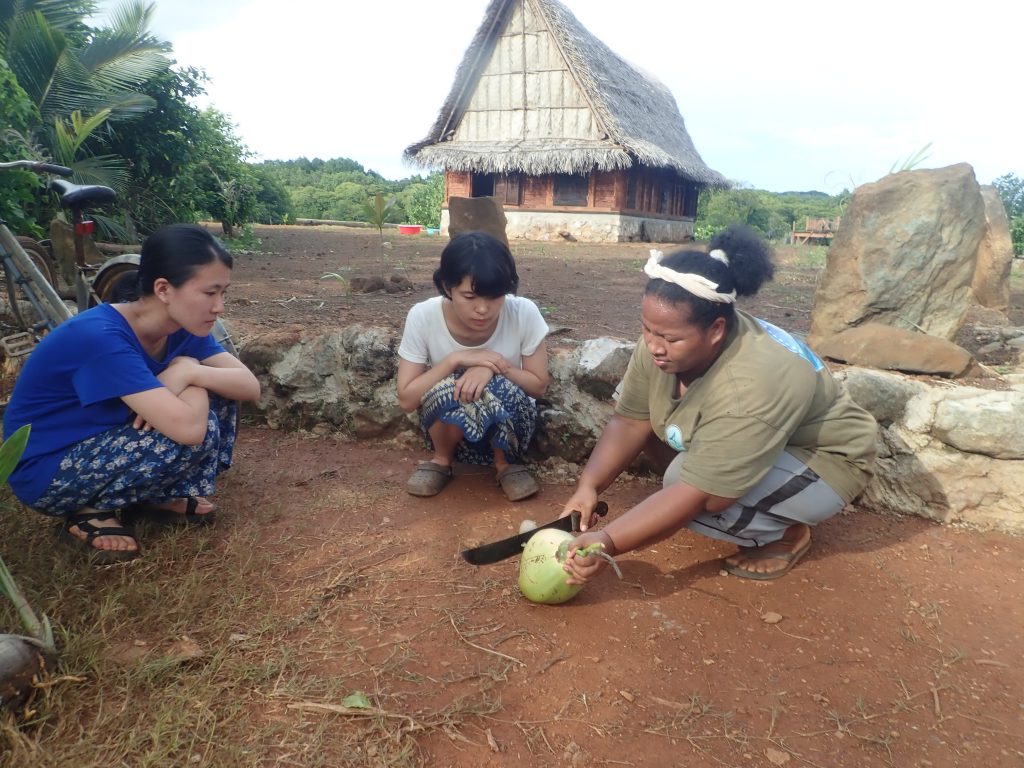
The first three days were a time of learning about the wisdom and skills of the local way of life. We made mats for sleeping on the floor by weaving them from large coconut palm fronds. We also learned how to husk a young coconut and drink the juice inside. Coconut milk for cooking is made by grinding and squeezing the copra from old coconuts left on the ground for some time. The fibrous outer part of the coconut is dried and used as a fuel. The participants were amazed at the traditional wisdom of using nature without waste and transforming it into food and tools.
In the middle part of the program, we were given the opportunity to stay with a host family for two days and one night, with each of participant visiting a different family and spending time with them as a family.
They cooked together and played with the children at each home, and were fully accepted into the local lifestyle.
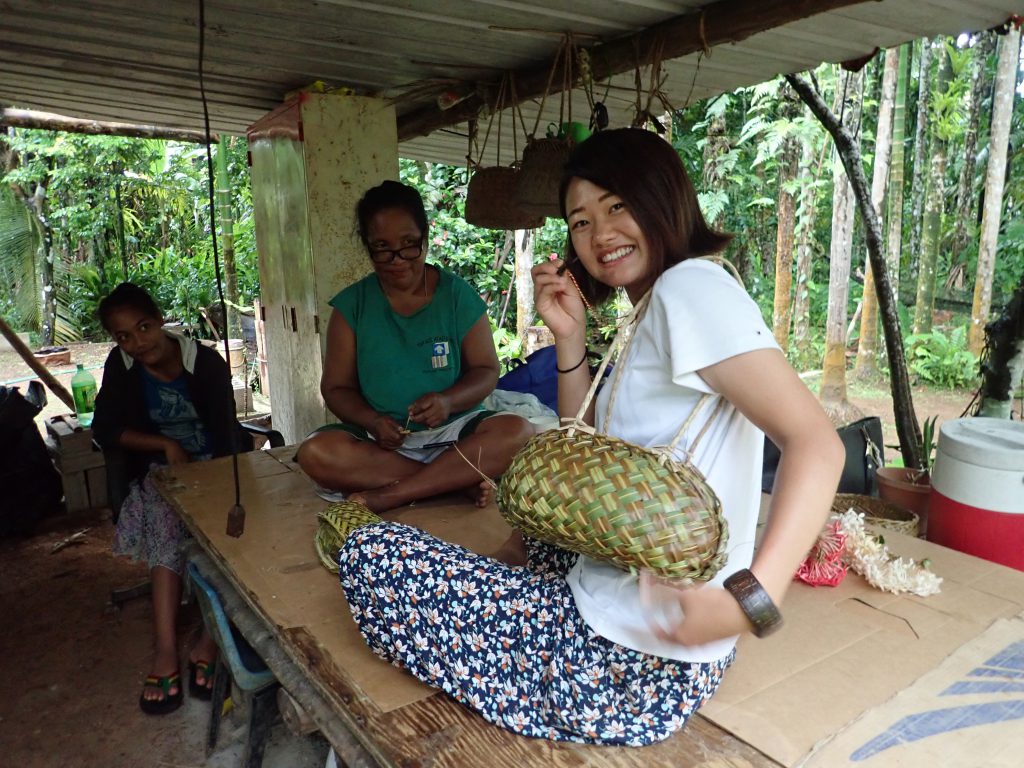
When they returned in the evening of the second day, they had wreaths ont thier heads and were filled with souvenirs, including handmade bags and dinner baskets overflowing with fish, taro, and other delicacies. They returned home with their host families, laughing happily together.
The last days of our stay were busy with activities at sea, participation in local community work, and a farewell party, leaving no time to catch our breath.
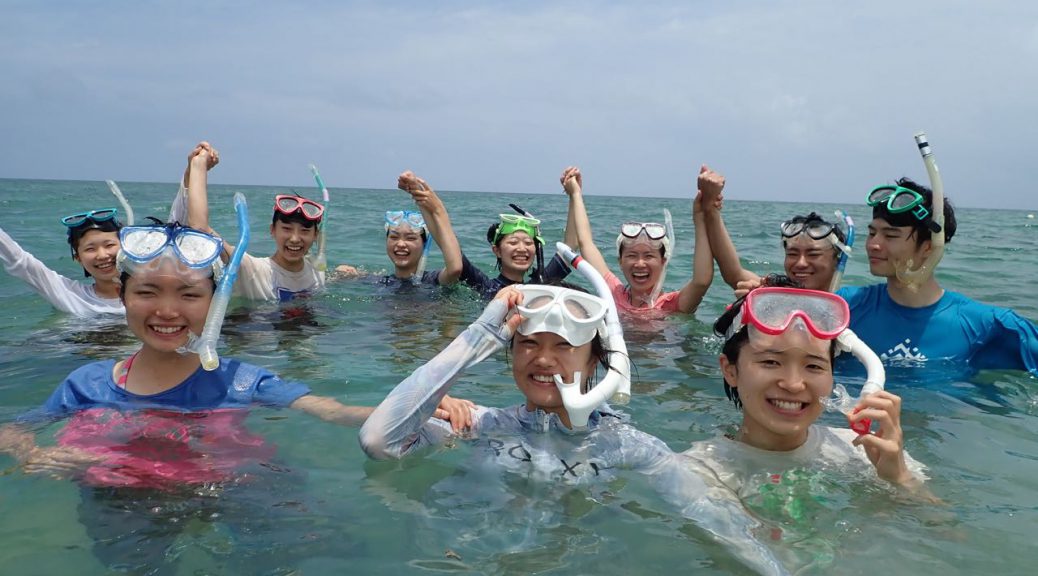
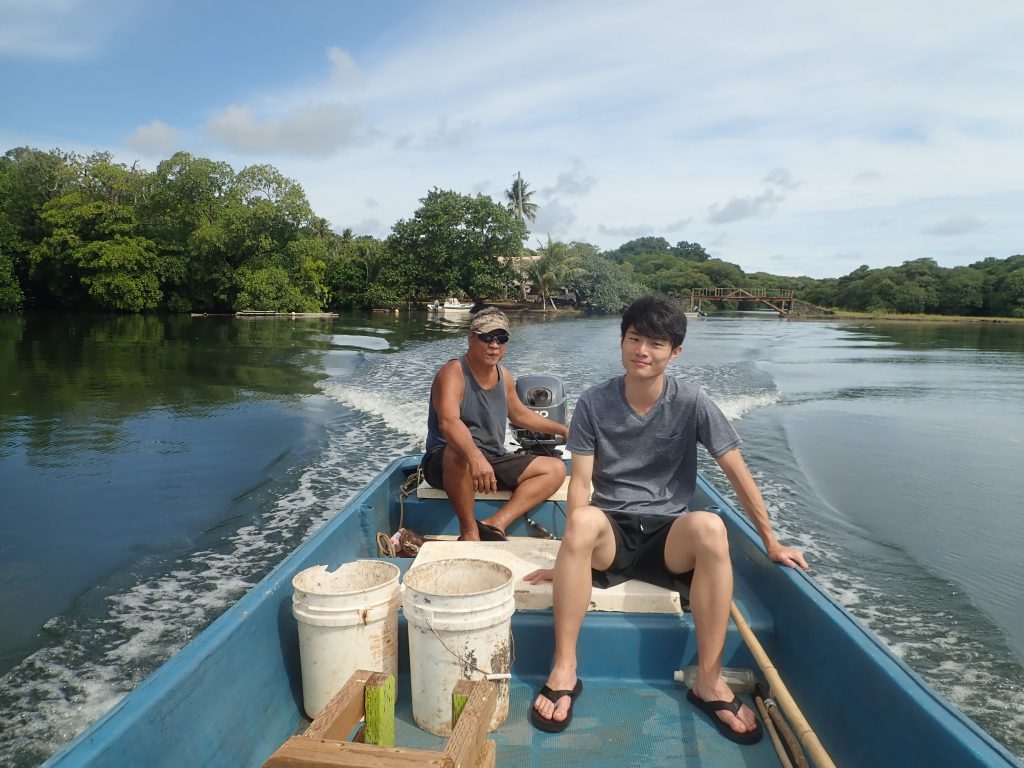
The lagoon was not very clear at the shore due to nutrients from mangrove forests and other sources, but once you get closer to the reef, you can see clearly into the shining world. We also joined a local conservation organization, the Tamil Rescue Conservation Trust (TRCT), as they worked to clean algae and mud from the giant clams, which are caged and protected from predators.
The island of Yap has been experiencing a drought since December 2023, with almost no rainfall, and precipitation from January to March is 1/20th of a normal year.
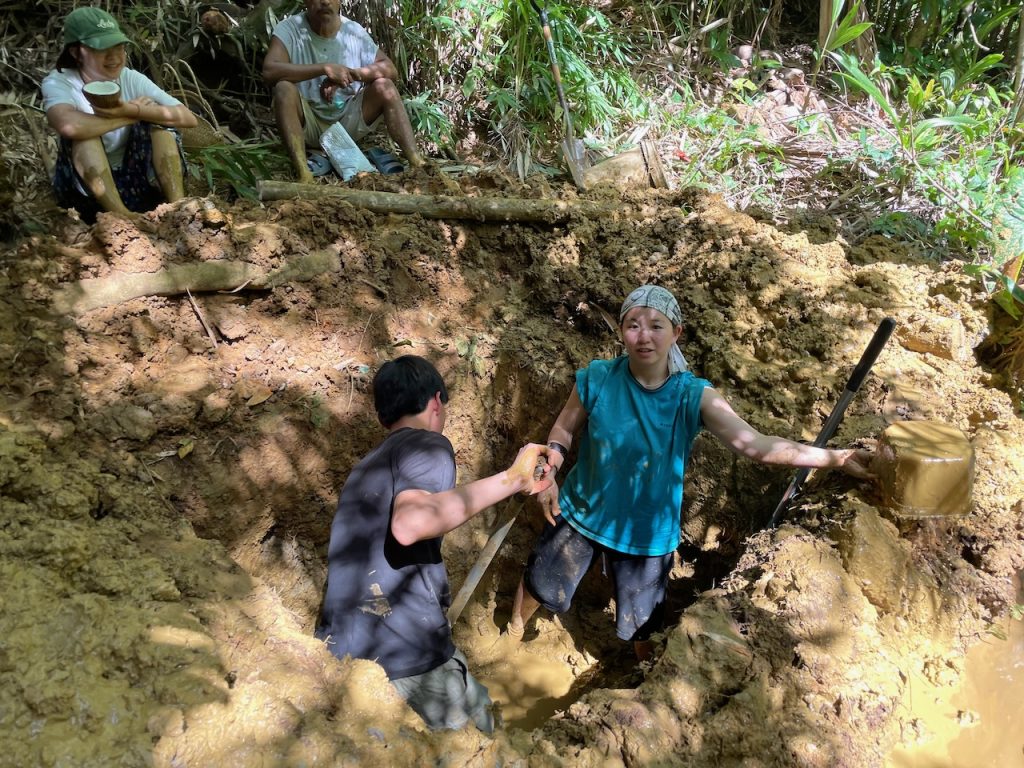
For this reason, the villagers of Aff began digging an old well in an effort to revive a well that had been abandoned for decades in order to secure water for daily use. We were allowed to participate in this community work and dug a hole as deep as our waists. The sticky soil in the valley line stuck to the shovel and made digging difficult to dig, but after about two hours of taking turns with the locals, we were able to dig down to almost shoulder deep.
We were able to see firsthand the effects of global climate change and how residents are working together to respond.
There are two flights per week between Yap and Guam. Both flights operate from midnight to dawn, so we arrived on Sunday morning around 1:00 a.m. and left the island before dawn the following Sunday, a full week’s stay. Although they would have been on the island for some more days, the participants were still amazed at the wisdom and skill of using one thing in many ways, and they also noticed the abundance of learning in the daily life of the island.
We have been informed by another village in the same Tamil community that they can host our group next time. We are looking at the situation and considering the next schedule as the water supply has already started on time due to the water shortage, and also the summer heat is more intense than before.