「暮らし」タグアーカイブ

田んぼがすっかりきれいになりました

Weeds were cleared in organic rice paddy

 エコプラスの休日農業講座「田んぼのイロハ」草取り編が、2026年6月20−21日の週末、新潟県南魚沼市で開催されました。子ども連れ4組など、首都圏や地元から13人が参加。無農薬田んぼでの最大の難関となる「田の草取り」に挑戦し、また山沿いの集落での棚田の維持管理を見学させてもらって、米作りの実態を感じていただきました。

Ecoplus conducted a weekend farming workshop, ‘ABC of Rice Farming: Weeding’, in Minamiuonuma City, Niigata Prefecture, on the weekend of 20–21 June 2026. Thirteen participants, including four families with children, joined the event from the Tokyo metropolitan area and the local region. They took on the challenge of ‘weeding rice paddies’ — the greatest hurdle in pesticide-free rice farming — and observed the maintenance of terraced rice fields in a mountain village, gaining first-hand experience of the realities of rice cultivation.

  • 草取りの説明
  • 稲そっくりの、イヌビエを見分ける
  • 草取り順調に進む。
  • 5歳児2人、2歳児と小学2年生各1人。がんばりました。
  • 草取りが終わった場所が、きれいに透けて見える。
  • 民宿の中で見つけたホタル

 5月からずっと乾燥した気候が続き、山からの沢水もやせほそっていたところ、この週末になって、梅雨前線が北上してきて、雨模様となりました。このため、初日の土曜日20日に、田んぼでの作業を前倒しで行いました。

The dry weather had persisted since May and the mountain streams had run low. However, this weekend, the rainy season front moved northwards, bringing rain. Consequently, we brought forward our work in the rice paddies to Saturday the 20th.

 田んぼには、長さ数センチの細長い葉っぱを十字に広げた「コナギ」や、とがった三角形の葉っぱを持つ「オモダカ」などの雑草が生えています。稲そっくりの立ち姿をしている「イヌビエ」もあちこちに生え出しています。30センチぐらいの高さに育った稲の苗の根っこから、隠れるようにして伸びているイヌビエもいます。

Weeds such as ‘konagi’, which has long, narrow leaves that spread out in a cross shape, and ‘omodaka’, which has pointed, triangular leaves, are growing in the rice paddies. ‘Inubie’, which resembles rice plants when standing upright, is also sprouting up here and there. Some inubie are even growing out from the roots of rice seedlings that have grown to around 30 centimetres tall, as if hiding among them.

  今年は、5月中旬の田植えの後、早稲田大学の実習チームなども入ってもらって、計3回の草取りをしてきました。それでもまたまた雑草は生えてきています。しかも水不足で土が露出している場所は、草を引っこ抜くことになり、力が必要でした。

After the rice was planted in mid-May, we held three weeding sessions with the help of a fieldwork team from Waseda University, among others. Nevertheless, weeds are sprouting up again. Moreover, in areas where the soil was exposed due to a lack of water, we had to pull the weeds out by hand, which was very labour-intensive.

2枚目の田んぼもすっきりきれいになりました。

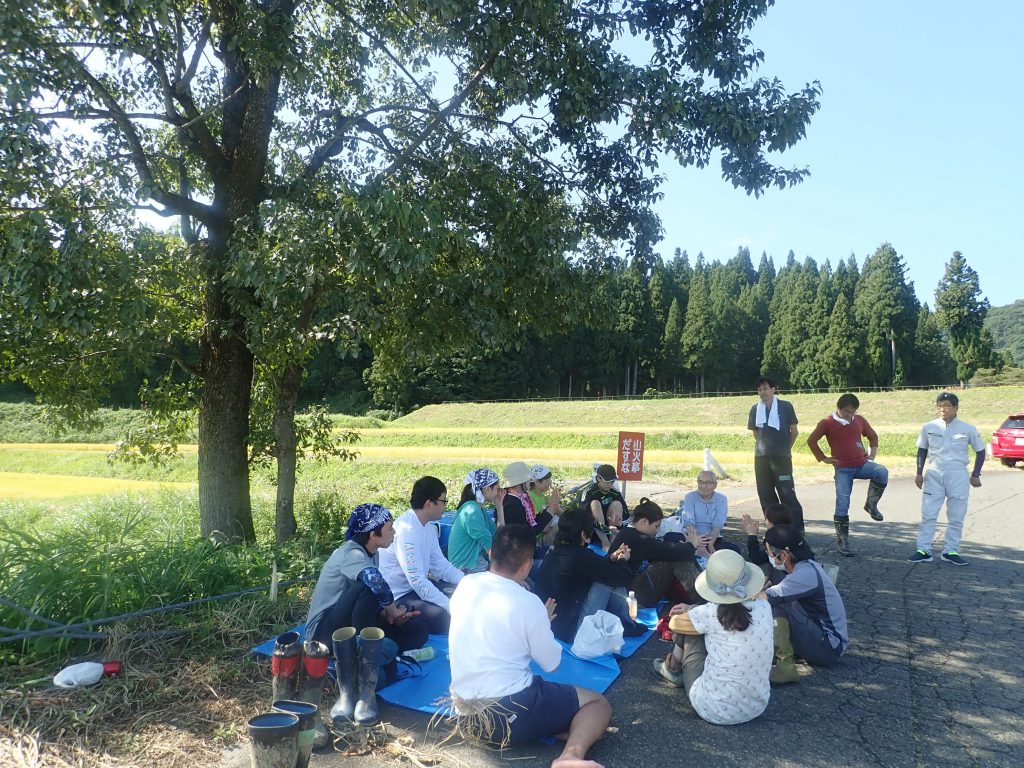
 地元のベテラン加藤吉春さんの指導と、参加者の頑張りで、2時間半ほどで2枚、計500平方メートルほどの田んぼをきれいにする事が出来ました。田んぼ全体がすっきりとしました。

Thanks to the guidance of local veteran KATO Yoshiharu and the participants’ hard work, we managed to clean two sections of rice paddy totalling around 500 square metres in just two and a half hours. The entire paddy now looks much tidier.

  2日目は、しっとりとした雨。標高で300メートルほど高い栃窪集落の棚田を訪ねました。若手専業農家の日熊恵一さんが、あぜの草刈りをしていました。胸近くまで延びたススキなどが、広く急なあぜをびっしり埋めています。

On the second day, it was drizzling. We visited the terraced rice fields in Tochikubo village, which is located about 300 metres higher up. HIGUMA Keiichi, a young full-time farmer, was mowing the weeds along the ridges. Pampas grass and other weeds, growing nearly chest-high, covered the wide, steep ridges densely.

あぜの草刈りをしていた日熊恵一さんが、あぜや水路の管理の大変さを教えてくれました。

 「田んぼの面積よりもあぜの面積の方が多いのが棚田地区。あぜの管理、その間を流れる水路の管理が大事なのです」と汗と雨でびっしょりになった日熊さんが説明してくれます。主流となる水の通り道を、ところどころせき止めて、左右の田んぼに水を引き入れる構造なども見せてくれました。

“In terraced rice paddies, the area of the ridges is greater than that of the paddies. Managing the ridges and the irrigation channels that run between them is crucial,” explained Mr HIGUMA, who was drenched in sweat and rain. He also showed us the structure where the main waterway is dammed in places to divert water into the paddies on either side.

さまざまなカエルや鶏、植物を説明する深澤和基さん。

 同行してもらった生きもの専門家の深澤和基さんは、耕作をやめた田んぼの脇にあったモリアオガエルの卵を発見。高さ4メートルほどの高い枝に、直径10センチほどの白い泡のような卵があるのに、参加者もびっくりしていました。

Our guide, wildlife expert FUKAZAWA Kazuki, discovered the eggs of a forest tree frog beside a disused rice paddy. The participants were surprised to see the white, foam-like eggs, which were about 10 centimetres in diameter, on a branch about 4 metres high.

 参加者のみなさんは、「あぜの草刈りを一順するのに1カ月、それを3回するというのにはびっくり」「草取りの際の土の感触と景色が素晴らしい」「自主活動で、2週間のうちにまた草取りにきます」「休耕田で植物を育ててハーブ作りが出来ればいい」など、素敵なコメントを残してくれました。

They commented, “I was surprised to hear that it takes a month just to mow the grass along the ridges of 90 rice paddies once, and that we’d be doing that three times.” They also shared positive feedback such as, “The feel of the soil and the scenery while weeding are wonderful,” “This is a volunteer activity, so I’ll come back to weed again within the next two weeks,” and “It would be great if we could grow herbs in the fallow fields.”

 田んぼのイロハ稲刈り編は、どんな夏になるかで、日程変更の可能性がありますが、9月19−20日の予定です。

The harvest workshop is tentatively scheduled for 19–20 September, though the dates may change depending on the climate in the summer.

無農薬田んぼは、草とのたたかいの時期に

 エコプラスの休日農業講座「田んぼのイロハ」の無農薬田んぼでは、5月の田植え編で植えた苗が、順調に育っています。同時に、イヌビエやコナギなどの田の雑草が生え始め、あぜの草もぐんぐん成長中。これから「草とのたたかい」の時期に入ります。

260610立派に育った苗たち

 5月23−24日の田んぼのイロハ田植え編では、5歳の子どもを含む、20人近くが大きく育った苗を植えてくれました。その後は好天が続き。春先からの水不足もあって、田んぼに水を張ることが難しく、心配していました。関東などに大雨をもたらした台風6号ですが、新潟県の降雨はほどほどで、依然、山からの水は細ったままです。

 イロハ田んぼの苗は、背丈が20センチ前後となり、株分かれ(分蘖=ぶんげつ)が始まっています。同時に、稲そっくりのイヌビエや、細い十字の葉を持つコナギなどが発生してきました。特に、水のかかりが悪く、地面が露出してしまった場所に多くのイヌビエが発生してきています。

260610苗の根本近くに芽生えてきているコナギの十字の葉っぱ。中央右のとがった葉っぱはホタルイ。

 5月30−31日に実習でやってきた早稲田大学の学生たちが、一度は草取りをしてくれ、さらに6月10日には、手押し式の除草機「田車」(田車)を使った除草をしました。これでかなりの草を押さえる事は出来ましたが、まだまだ苗の根本などには雑草が残っています。

260530草取りをする早稲田大学の学生たち。

 6月20−21日の田んぼのイロハ草取り編のころには、隠れていた雑草のタネ第2陣が発芽してきて、また田を覆う事でしょう。

 またあぜの草も、元気いっぱい。田植え前に一度刈ったのですが、一部は腰の高さほどまでに伸びていました。6月11日に、刈払機できれいにはしましたが、こちらもまたぐんぐん伸びてくる事と思います。

あぜの草刈り。1カ月でひざから腰にかけての高さまで伸びてしまった。

 地元の長老がいう、「草とのたたかい」の時期に入ります。除草剤を使わない無農薬田んぼには、緑色の筋が鮮やかなトノサマガエルも元気よくドボンという音を立てて、泳いでいます。手を広げて苗一本一本の根本から雑草を取り除いていると、稲たちと対話しているような気持ちになります。88回手をかけるので「米」と言われるのも納得です。無農薬栽培の真骨頂、休日農業講座「田んぼのイロハ」草取理編への参加、お待ちしています。

食と農、そして人々のつながりを体感

Experience the connections between food, agriculture people, and the place

早稲田大学の実習を受け入れ支援

Hosted a field trip of WASEDA university

 エコプラスは、2026年5月30−31日、新潟県南魚沼市樺野沢集落で、早稲田大学の実習として、23人の学生を受け入れ、その活動を支援しました。エコプラスの代表理事でもある高野孝子教授の「フィールド基礎演習」の一環。2、3年生の23人が参加しました。

 From 30 to 31 May 2026, Ecoplus hosted and supported 23 Waseda University students during a field study in Kabanozawa village, Minamiuonuma City, Niigata Prefecture. This was part of the “Field Basic Seminar”, led by Professor Takako Takano, who also serves as Ecoplus’s executive director. Twenty-three second- and third-year students participated.

 拠点とさせてもらったのは、上越国際スキー場の民宿街でもある、樺野沢集落。初日は、エコプラスが「田んぼのイロハ」プログラムで使っている無農薬田んぼに、ゴー。この田んぼは、1週間前に田植えを終えたばかり。田植えの際に、植え方が浅過ぎたりして流れてしまった苗などを植え直す「補植」という作業に挑戦しました。

We stayed in the Kanazawa village, which is home to the Joetsu Kokusai Ski Resort’s guesthouse district. On the first day, we headed to the chemical-free rice paddy used by Ecoplus for its “ABC in a rice paddy” programme. Rice planting had been completed there just a week earlier. We tried our hand at ‘additional replanting’ — the process of replanting seedlings that had been washed away because they had been planted too shallowly during the initial planting.

 はだしになって田んぼに入った瞬間、キャーという悲鳴や、「足の裏に何かいる」という叫び声まで。しばらくは補植どころではない大騒ぎ。落ち着いた段階で、田んぼをよく見ると、無農薬ならではの生きもの多さに気付いてくれました。倒れそうな苗をそっと起して真っ直ぐにし、1本だけの苗になっている場所に2−3本の苗を追加して植えて進みました。

As soon as the students stepped into the paddy barefoot, there were screams of “Eek!” and cries of “There’s something on the bottom of my foot!” Once things had settled down, we took a closer look at the paddy and noticed the abundance of creatures unique to pesticide-free farming. We gently straightened seedlings that were about to fall over, adding two or three more to spots where there was only one. We worked our way through the field, doing this.

 23人もの人手なので、3畝(さんせ=約300平方メートル)の田んぼの補植は30分ほどで終了。次にその半分ほどの田んぼに入って、芽が出始めた雑草を取る作業に入りました。田植え後わずか1週間なのですが、好天の中で雑草が泥の表面に数センチの細長い葉を広げ始めていて、それを両手でかき混ぜるようにして根を浮かしていきました。草は浮いたまま枯れていくので、取り出す作業はありません。

Working together as a team of 23, we replanted an area of about 300 square meters in just 30 minutes. Next, we moved to a field about half that size to pull up newly sprouted weeds. Despite it being only a week since planting, the fine weather had enabled the weeds to extend their slender leaves a few centimetres above the muddy surface. We loosened the roots by stirring the mud with both hands. Since the weeds wither once exposed, there was no need to pull them out.

 50年ほど前までは、日本中の田んぼで行われていた作業。多くが農家だった当時の日本人には身近な作業だったはずですが、若い学生たちには、新鮮な体験となったようです。

This task was performed in rice paddies all over Japan until around 50 years ago. While it was undoubtedly familiar to the Japanese people of that era, many of whom were farmers, it was a new experience for the young students.

39歳の専業農家日熊恵一さん。朝4時過ぎから田んぼを見回り、田を起し、代かきをし、田植えをして7時からの対話に駆け込んできてくれました。

 その後は、地域の長老峠英男さんやベテラン農家の加藤吉春さん、それに若手専業農家日熊恵一さんの話を聞き、いまのコメ作りが置かれている現場の声を聞きました。

Next, we heard firsthand accounts of the current realities facing rice farming from local elder TOGE Hideo, veteran farmer KATO Yoshiharu and young full-time farmer HIGUMA Keiichi.

 2日目は、地域の要となってきたお寺を訪問。地元で600年を超す歴史を持つ龍澤寺の住職小川泰彦さんのお話を聞きました。学生たちからは、小川さんの修行時代の様子や、地域の課題などについての質問が出ました。小川さんは、「いまでも日々修業、この場そのものも私にとっての修業。地域の人によりよく生きてもらいたい。それが願い。こうしなさいと私が意見するのではなく、私が聞く、寄り添う。電車が揺れた時のつり革のように」 と話してくれました。

On the second day, we visited a temple that has long been a pillar of the community. We then attended a talk by OGAWA Yasuhiko, the head priest of Ryuzan-ji Temple, which dates back over 600 years. The students asked Mr Ogawa questions about his training days and the challenges facing the community. Mr Ogawa shared, “I am still training every day; this very place is my training ground. My wish is for the people of this community to live better lives. Rather than telling them what to do, I listen to them and support them — like a strap on a train when it sways.”

小川泰彦さん。前夜は同じ本堂で、太鼓の演奏会があったばかり。100人前後の方が集まって大変でした、とのこと。「お寺に近づくきっかけとしてのイベント」と説明されていました。

 散策の時間には、一人で、あるいはグループで地域を歩き、通り掛かりの方にお話しを聞いたり、地域の状況を観察したりして、フィールドワークの基礎的動作を体験しました。

During the walking tour, participants explored the local area alone or in groups, talking to passersby and observing the environment. This gave them hands-on experience with the basics of fieldwork.

 振り返りの場では、「農の現状、とても厳しい事が分かった」「消費者側でしかなかったが、生産者の立場を知る事が出来た」「自然に近い光景の美しさに感動した」などの声が相次ぎました。

During the reflection session, participants shared comments such as “I realized just how tough the current situation is for farmers,” “I’d only ever been on the consumer side, but now I understand the producers’ perspective,” and “I was moved by the beauty of the natural scenery.”

 若い世代にとっては、体験を通じて視野を大きく広げる機会になったようです。

For the younger generation, this experience seemed to be a valuable opportunity to broaden their horizons significantly.

風に吹かれ、波の音に包まれた10日間

Ten Days Blown by the Wind and Enveloped by the Sound of the Waves

ヤップ島プログラム2026を実施しました

Yap-Japan Cultural Exchange Program 2026

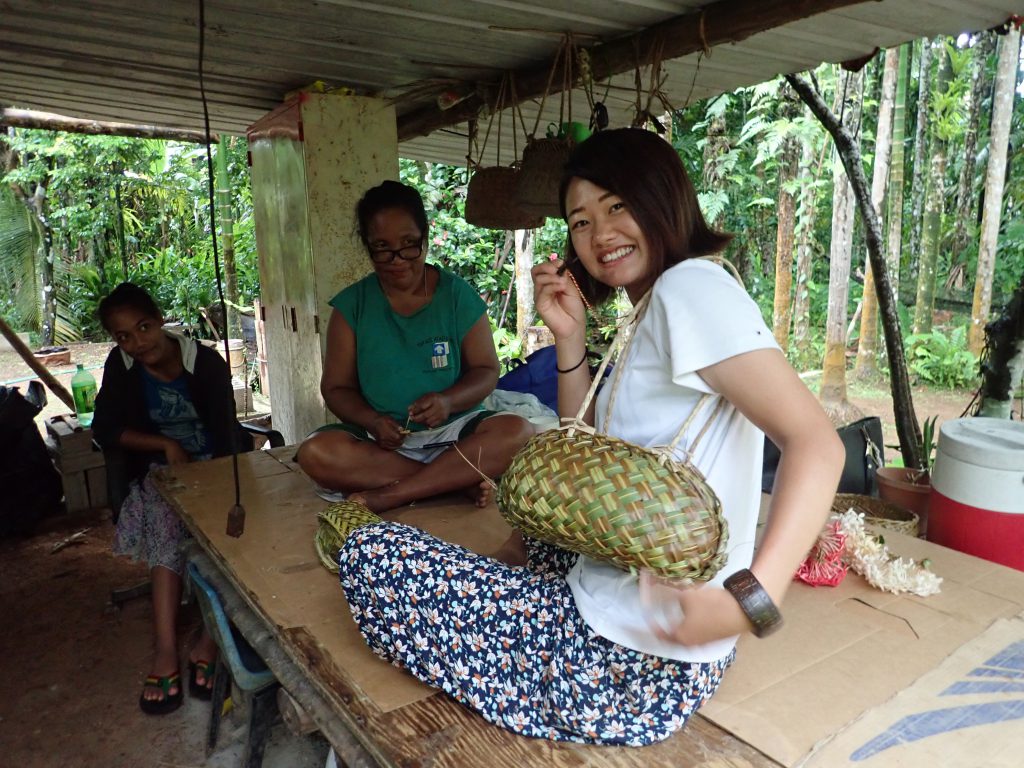
 エコプラスのヤップ島プログラムが、2026年3月7日から18日までの現地10日滞在の日程で実施されました。参加したのは大学生の女性6人男性2人。ヤップ島近くで発生した台風3号(国際名Nuri)の影響で前半は雨風が激しくなる中での生活の場作りと、地元の暮らしの技の習得。天候が回復していった後半は、地元のみなさんとのさらに深いお付き合いをさせていただきました。

Yap-Japan Cultural Exchange Program was held by Ecoplus from March 7 to 18, 2026, with a 10-day stay on the island. The participants included six female and two male university students. Due to the impact of Typhoon No. 3 (international name Nuri), which formed near Yap Island, the first half of the program involved setting up our living space and learning local life skills amidst heavy rain and wind. As the weather improved in the latter half, students were able to deepen their relationships with the local community.

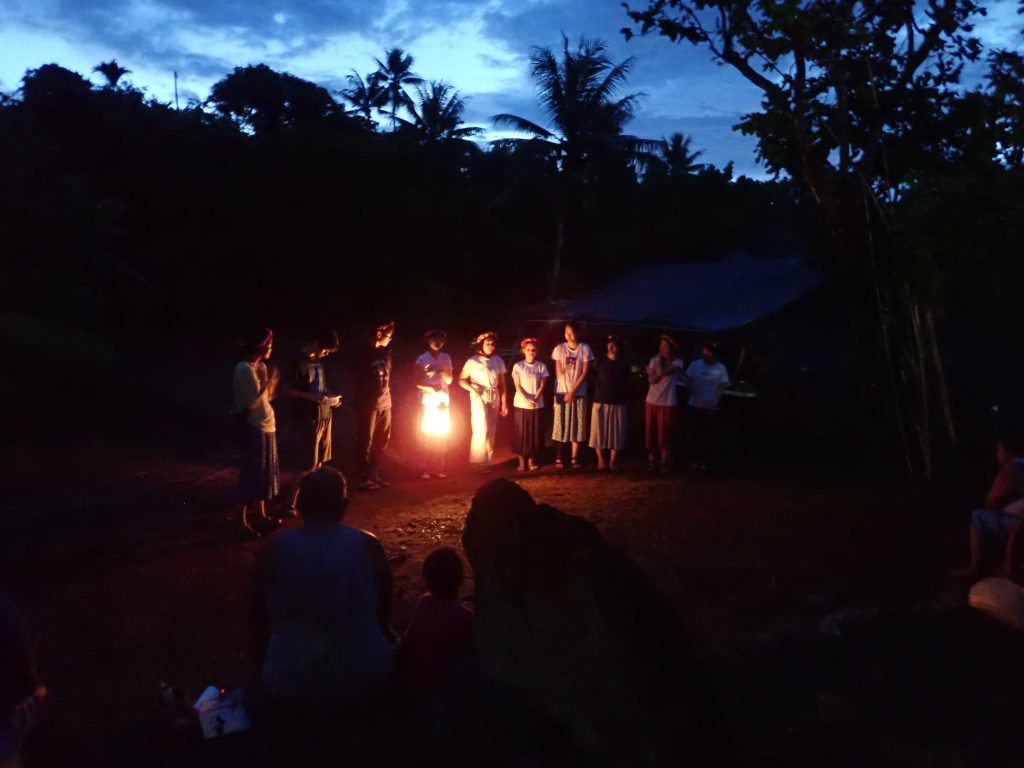
 滞在したのは、ヤップ島の北側にあるマープ地区。第1回のヤップ島プログラムを1992年にさせていただいた思い出の場所です。第1回のコーディネートをしてくれた当時の教育委員会のティム・ムーンさんが拠点とさせていただいた女性たちの集会所のすぐ裏に住んでおられたり、第1回から親身に応援いただいた長老たちの子や孫のみなさんが続々とお世話をしてくださったり。30年以上プログラムを続けてきたエコプラスの髙野孝子代表理事と大前純一事務局長にとっても、特別な展開になりました。

We stayed in the Maap Community on the northern side of Yap Island. This is a place of fond memories, as it was where we held the first students program in 1992. Tim Moon, who coordinated the first program and was a member of the Department of Education at the time, lived right behind the women’s house that served as our base. Additionally, the children and grandchildren of the elders, Gaayan and Dukchul, who had supported us wholeheartedly since the very first program came one after another to look after us. For TAKANO Takako, Representative Director of Ecoplus, and OHMAE Junichi, Director—who have continued the program for over 30 years—this was a particularly special experience.

長老のラマンさん(左)からお話を聞く。ラマンさんは、過去お世話になったガアヤンさんの長男。Students listen to Elder Raman (left). Raman is the eldest son of Gaayan, who helped us in the past.

 参加者が滞在したのは、オネッツ村の女性集会所。コンクリート造りの建物です。参加者は最初は数人が室内で寝ていましたが、風が通るパティオで寝る方が風が通って快適。さらに海側にある伝統的なヤシの葉ぶきの小屋の方がさらに快適なことが分かり、半数は小屋で寝ることに。吹き込む雨を避けて、快適に休みました。

The participants stayed at the women’s house in Wonnet Village, a concrete building. At first, a few participants slept inside, but they found it more comfortable to sleep on the breezy patio. They then discovered that the traditional thatched-roof huts on the ocean side were even more comfortable, so half of them decided to sleep there. They were able to rest comfortably, sheltered from the rain.

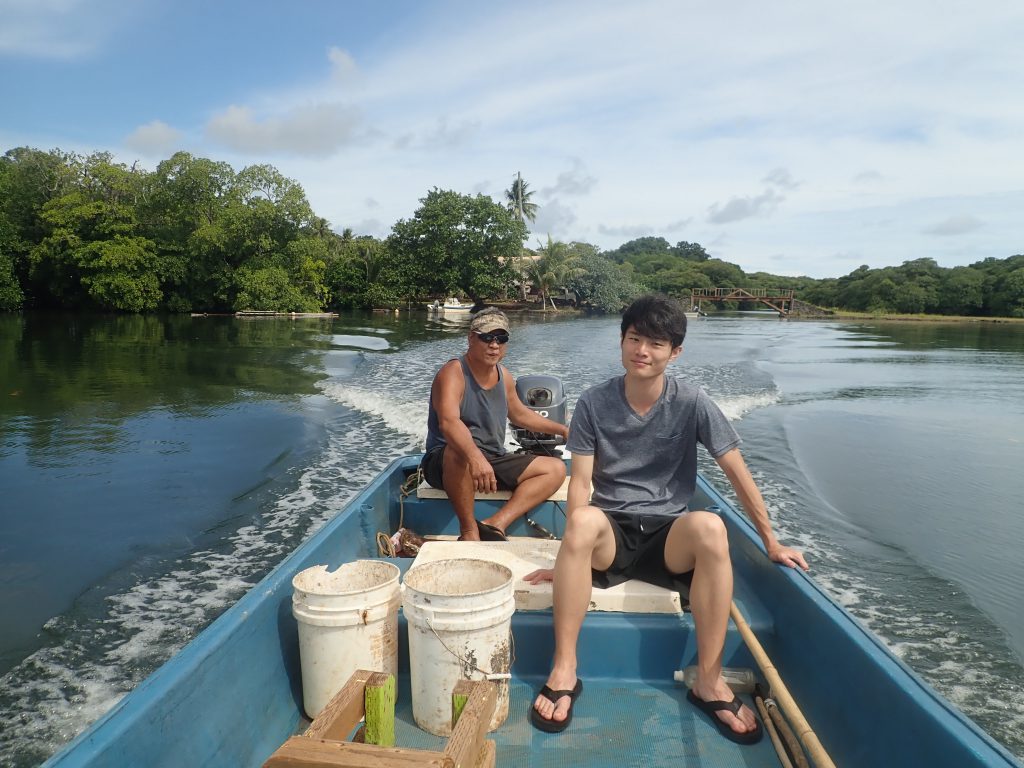
 地元の方に、食材となる魚やタロイモを分けて欲しいとお願いしていたところ、突然誘われて海へ。引き潮でひざ下ほどになった場所に網がかけてあり、網を探すと手のひらを越す魚がたくさん。さらに干上がり始めた藻場には魚が迷い込んでいて、鬼ごっこのように魚を追いかける展開に。

We had asked the locals if they could share some fish and taro with us, and suddenly, they invited us to the sea. A net had been set in a spot where the water was only knee-deep at low tide, and when we searched the net, we found plenty of fish larger than the palm of our hands. Furthermore, fish had strayed into the seaweed beds that were beginning to dry out, leading to a scene where we chased the fish like a game of tag.

 さらに、集会所の前で暮らすチゲイさんは、海から、体長1メートル以上もある鋭い歯を持つ魚(バラクーダ)などを担いで登場して、どうぞと分けていただきました。

Furthermore, Chigei, who lives in front of the women’s house, appeared carrying fish—including a barracuda with sharp teeth over a meter long—from the sea and generously shared them with us.

いただいたバラクーダ。ラグーンの中でのトローリングで獲ってきたとのこと。A barracuda Chigei caught. He told us he caught it trawling in the lagoon.

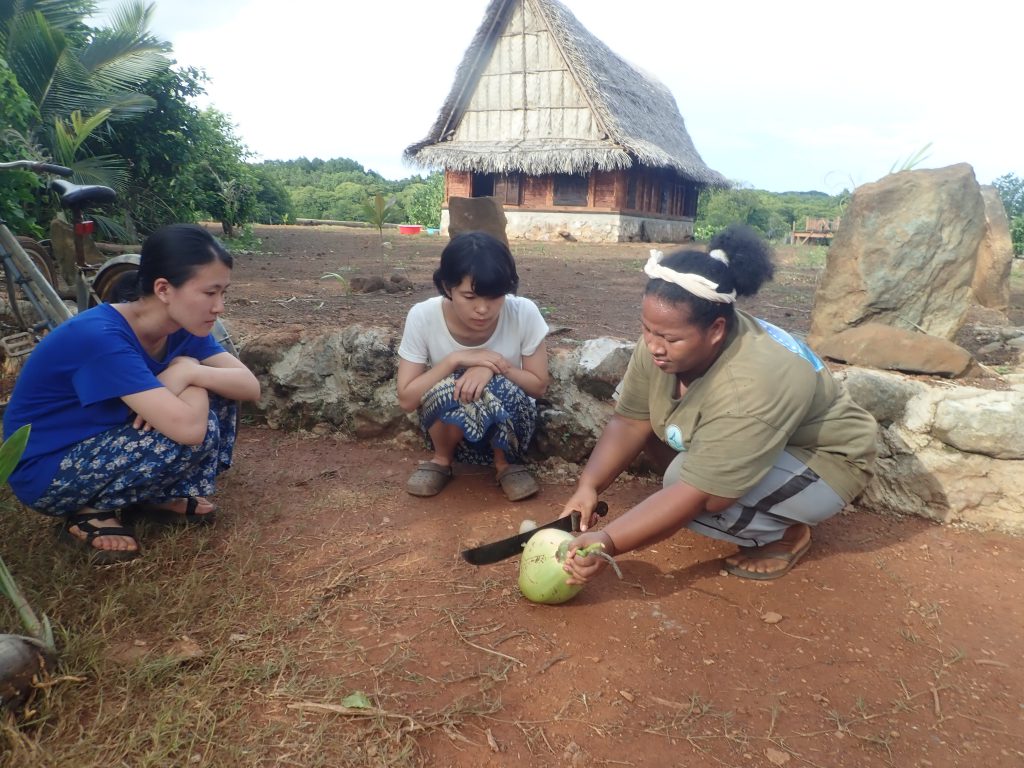
 タロイモは、陸側にある畑に行って、収穫。サトイモのような葉っぱですが、身長をはるかに超える高さに葉っぱが育っていて、激しい雨をしのげるほど。

We were also invited to a field on the land side to harvest taro. The leaves resemble those of Japanese small taro, but they had grown to a height far exceeding our own, providing enough shelter to withstand the heavy rain.

 ホームステイでそれぞれ家庭に受け入れていただき、気がつけばみんなが大きな家族になったような10日間でした。

Students were each welcomed into different host families, and before we knew it, those 10 days felt like we had become one big family.

海岸には倒れたココヤシが何本も。砂浜はやせ細ってほとんどなくなっている。There are several fallen coconut palms on the shore. The sandy beach has shrunk and is almost gone.

 東に開けた海岸は、海面上昇の影響で激しい波が打ち寄せるようになり、長老のラマンさんによれば、この10年20年で、海岸線が数十メートル交代して、ヤシの木が3列分ほど海に倒れ込んでしまったとのこと。2004年の大きな台風時には、波が家のまわりに打ち込んで、コンクリートの家も基礎がえぐられて押し流されたとのこと。

The coastline facing east has been hit by fierce waves due to rising sea levels. According to the elder, Raman, over the past 10 to 20 years, the coastline has shifted by several dozen meters, and about three rows of palm trees have been swept into the sea. During the major typhoon in 2004, waves crashed around the houses, eroding the foundations of even the concrete homes and washing the house away.

 厳しい現実にも直面したプログラムでした。帰国した参加者は感想文などをまとめていて、報告書を作成し、7月11日土曜日午後に報告会を開催します。詳細は、後日、このウェブサイトでお知らせします。

It was a program that also confronted us with harsh realities. The participants who have returned home are compiling their reflections and reports, and we will hold a debriefing session on Saturday afternoon, July 11. Details will be announced on this website at a later date.

オオヤマザクラを楽しむ会

Gathering to Enjoy Wild Cherry Blossoms in Niigata

オオヤマザクラ2015年4月25日

 日本百名山のひとつ巻機山(1,967メートル)の中腹には、野生種の桜、オオヤマザクラが点在しています。遅い春、雪がまだ残る時期に満開となる、そのオオヤマザクラを訪ねます。

In the middle of Mt. Makihata (elevation 1,967 m), one of the wild cherry trees, the O-yama-zakura, blooms silently amid the snow. In late spring, we will visit the site and enjoy the cherry blossoms over the snow.

 開花状況は今後の天候次第ですが、清らかな山と一斉に木々が芽吹き花咲く自然を楽しみます。ツキノワグマの早い冬眠明けが予想されるため、地元猟師の助言を得て、安全な範囲での行動となります。
 宿泊するやまごさんも、ご高齢となり、準備の関係で人数を抑えての実施となります。

Whether or not the cherry trees will be in full bloom depends entirely on the progress of the season. Either way, we will enjoy the sudden appearance of flowers and young leaves during the late arrival of spring in the deep mountains. We will conduct the program under the security advice of the local hunters, expecting the bears to wake up early from hibernation. Due to the age of the family that operates the inn, we can only accept a limited number of applicants.

【日程】2026年4月25日(土)午前11時半 現地集合
         26日(日)午前10時ごろ 現地解散

【場所】新潟県南魚沼市清水集落

【宿泊】民宿「やまご」

【内容】

 25日午後、威森松山方面に移動し、雪上散策、自然観察、オオヤマザクラ探訪、夕食と懇談。

 26日午前、集落裏のブナ林散策、午前10時ごろ解散。希望者は塩沢市街地に移動し、江戸時代の雰囲気を再現した牧之通り鈴木牧之記念館、など。

【費用】プログラム費6,000円(ガイド、資機材、保険など。学生子どもは3,000円、エコプラス会員には割引有)。宿泊代1泊2食8,000円程度は宿に直接支払。

【交通】現地までの路線バスは3月末で運行停止となります。電車で来訪の方は塩沢駅からタクシーで乗り合うか、時間があえばスタッフの車に、また自動車での参加者のご好意での同乗も。

【定員】10人程度

Date: April 24-25 2026

Gathering at 11:30 am, at Shimizu Village

Accommodations: A local Inn, “Yamago”

Contents: Hiking over the snow, Nature observation, Visiting cherry trees. Hiking in the beech forest, Enjoying the local dishes, and so on. Break up will be 10 am on site, then you can come down to the town where you can stroll the street, called, “Bokushi-Dori,” which represent Edo time atmosphere, or other museums.

Fees, 6,000 JPY for the program including guides, equipments, insurance and others, which is 3,000 JPY for students and children. Lodging fees around 8,000 JPY needed.

Transportation: Public bus service will be terminated at the end of March. If you are not coming by car, you need to take taxi from JR Shiozawa Station, or sharing ride with staff or other participant coming by cars.

申し込み Application

 下のフォームからお申し込み下さい。Please use below application form. 問い合わせは、info@ecoplus.jpまで。If needed contact to info@ecoplus.jp

← 戻る

申し込み、ありがとうございます。追って連絡を差し上げます。Thank you for filling in the form. We will contact you shortly.

申し込み、ありがとうございます。追って連絡を差し上げます。Thank you for filling in the form. We will contact you shortly.
どこでこのプログラムを知りましたか

ヤップ島プログラム 26年3月に実施

自然の中で仲間と暮らす、シンプルな10日間

 エコプラスは、ヤップ島プログラムを、26年3月に実施します。3月7日から18日まで、現地滞在10日間。1992年以来、30年以上つながってきたプログラム。太平洋でもっとも伝統を色濃く残すとされるヤップ島の、さらに中心部から離れた村落に受け入れてもらい、その自然と人々の暮らしから学びます。

 今回の滞在先は、ヤップ島北東部のマープ地区にあるトルー村。東に向かって浅い海が開けた美しい村です。

 ヤップ島では、サンゴの浅い海とすべての陸地が、個人や集落の所有となっていて、一般人の立ち入りが出来ません。観光客として入り込むことが極めて難しい場所です。エコプラスはこのトルー村や周辺の村のみなさんとは40年以上、お付き合いがあり、その上で今回久しぶりにプログラムを受け入れていただきます。

 プログラムのテーマは「豊かさとは何か」です。自然のすぐそばで、自然と調和した暮らしをいまも維持している村にお邪魔して、人としての毎日がどのように組み立てられているのかを体感し、その上にある「幸せ」とは何かを考えます。

 日本のようにふんだんに電気やガス、水道があるわけではありません。シャワーは水だけ。ネットもつながりません。地元の集会所の床に雑魚寝します。地域の方たちの動きを学びながら、自分たちで食事を作り、暮らしを組み立てていきます。日本からのスタッフも、手出しをせずに、安全面での見守りに徹します。

 シンプルな暮らしを通して、何が大切なのかを体験を通じて考える機会になります。社会のあり方を考える素材を見つけたい人におすすめです。

 ヤップ島プログラムは、1992以来30年以上実施され、400人以上の若者たちが関わってきました。それまでの価値観を揺るがされ、人生に大きなインパクトを受けた人たちが多いことが長年の追跡調査で示されています。

 2026年ヤップ島プログラム概要

【日程】2026年3月7日から18日
【対象】15~25歳程度の健康な男女。身体の障害、国籍は不問。新しいことに取り組み、自分の可能性にチャレンジする意欲を持つ人。
【プログラム費】15万円(滞在費含む)など。渡航費、成田空港までの旅費、保険料、事前準備、個人装備は除く。
【渡航費】ユナイテッド航空利用、10月22日現在で138,960円。
  往路 3月7日1100成田発、グアム経由8日0110ヤップ着
  帰路 18日0235ヤップ発、グアム経由 0955成田着
【定員】9名程度(最少催行人員6名)
【説明会・個別説明】11月29日まで随時(オンラインも可)
【参加締切】11月30日(定員に達し次第締切)
【プログラムの流れ】
 顔見せ会(12月13日土曜午前10時から)で情報共有をし、準備を一緒にします。ヤップ島に関する下調べを行い、事前キャンプ(2月1日、日帰り)を経て現地へ。本番の後は、みんなで報告書を作成、報告会を実施します。応募の時点から準備、本番、そして報告会(6月ごろ)までがプログラムです。
【問い合わせ】info@ecoplus.jp

 関心ある人は、以下から仮申し込みを送ってください。説明会の連絡や本申込書、健康チェック票をお送りします。

ヤップ島プログラム2026仮申し込み

← 戻る

ご回答をありがとうございました。 ✨

晴れ間に恵まれ、稲刈りを実施・・・休日農業講座「田んぼのイロハ」

Enjoyed harvesting work in the organic rice paddy in Minamiuonuma

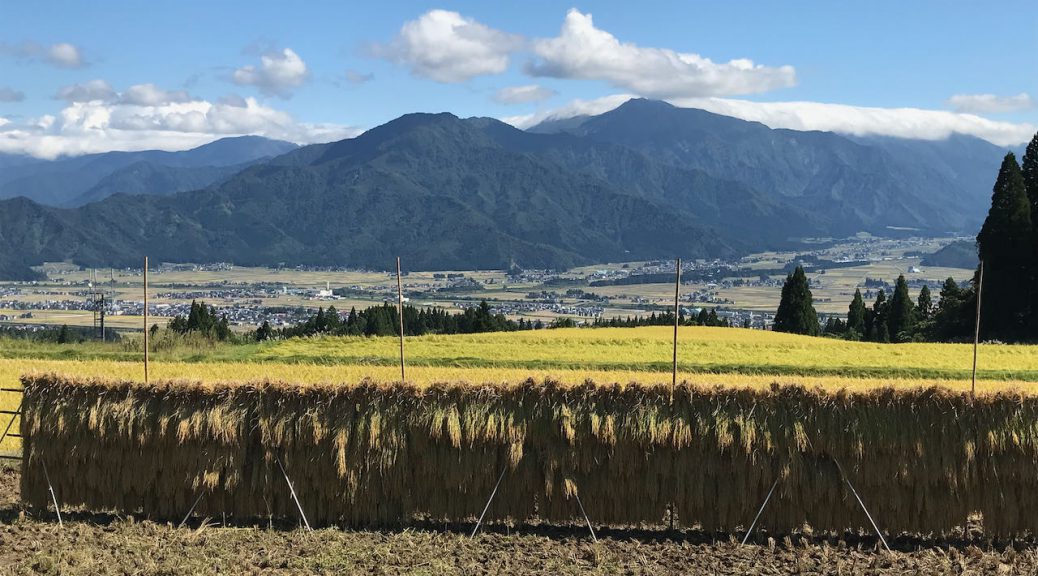
 休日農業講座「田んぼのイロハ」の稲刈り編を2025年9月20-21日に、南魚沼市樺野沢地区で、15人のみなさんと楽しみました。天候が不安定な中、予定を変更して20日に稲刈り。21日は土砂降りの雨模様となる中で、地元農家の「コメごしらえ」作業を見学させてもらい、おコメ作りの現状を学ばせてもらいました。

We enjoyed the rice harvesting workshop of “The ABCs in Rice Paddies” with 15 participants on September 20-21, 2025, in the Kabanozawa village of Minamiuonuma City. Due to the unstable weather, we changed our plans and harvested rice on the 20th. On the 21st, amidst pouring rain, we observed a local farmer’s “rice preparation” work and learned about the current state of rice farming.

 今年は、7月の降水量が35ミリと平年の2割にも満たず、田んぼはひび割れて大変な状態でした。8月あたまにようやく雨となって一息付きましたが、その後も平年より2度以上高い気温が続きました。「田んぼのイロハ」で田植え、草取りをしてきた2枚の無農薬田んぼは、前の年より背丈が低く、茎の数もまばらな感じです。

 夕方から雨予報の20日は、手早くお昼ご飯を済ませると、田んぼに向かい、稲刈りを開始。カマを使って刈り取りを始めました。難しいのは、刈った稲を束ねる作業。何度か参加したベテランの説明も聞きながら、それぞれ悪戦苦闘しつつ稲束に仕上げていきました。

With only 35 millimeters of rainfall in July, less than 20% of the average, the rice paddies in Minamiuonuma were left cracked and in terrible condition. Rain finally came in early August, providing some relief, but temperatures remained over two degrees higher than average throughout the summer. The two pesticide-free paddies that we tended to through planting and weeding, following the basics of rice farming, have shorter stalks and fewer stems than last year.

On the 20th, rain was forecast for the evening, so we quickly finished lunch and headed to the fields to start harvesting. We began cutting the rice with sickles. The tricky part was bundling the cut rice. After listening to explanations from veterans who had participated several times before, we each struggled but managed to finish making rice bundles.

 時折、青空から陽射しがもれてきます。南からの強い風が吹き、稲穂が波打つようにゆれていきます。休憩時間には、目の前に広がる田んぼの様子を見ながら、コオロギなどの虫の声にいやされました。

 快調に作業が進み、1枚目の田んぼは2時間ほどで終了。「まだ時間があるから、やりましょう」という参加者の一声。もう一枚の田んぼの刈り取りに入りました。みんな手慣れてきて、刈る人、束ねる人、運ぶ人、はざにかける人と、自然と分担がされ、1時間で田んぼの半分をきれいに刈り取りました。

Occasionally, sunlight filters through the blue sky. A strong wind blows from the south, causing the rice stalks to sway like waves. During breaks, we were soothed by the sounds of insects like crickets while gazing at the rice fields stretching out before us.

Work progressed smoothly, and the first field was finished in about two hours. “We still have time, let’s do it,” said one participant. We started harvesting the second field. Everyone was getting the hang of it, and roles naturally divided: some cut, some bundled, some carried, and some hung the bundles on the drying racks. In just one hour, we neatly harvested half the field.

 2日目は、未明から激しく雨が降りました。車に分乗して、標高が300メートルほど高い栃窪集落を訪問。雨の切れ目に田んぼを見学し、ブナ林を見学しました。

 地元農家、日熊恵一さんの作業場では、刈り取ったコメの水分を落とし、もみ殻を外して、石などの異物を取り除き、小さな粒や変色した米粒を取り除く「調整」作業が進んでいました。「今年のコメはきれいです」と出来上がったおコメを見せてもらいました。

Heavy rain fell on the second day, starting in the early morning. We split up and rode in cars to visit the Tochikubo village, which was located about 300 meters higher in elevation. During a break in the rain, we toured the rice paddies and explored the beech forest.

 At local farmer HIGUMA Keiichi’s workshop, the “adjustment” process was underway: removing moisture from the harvested rice, dehusking it, removing stones and other foreign objects, and sorting out small or discolored grains. “This year’s rice is beautiful,” he said, showing us the finished product.

 今年度のコメの農協買い上げ価格は、前年の20,000円から33,000円に上昇。さらに9月に入って4,000円が上乗せされたそうです。見学後の意見交換会では、地元のベテラン加藤吉春さんが「最新のコンバインは2,500万円するものもある。機械の値段を考えると、いままでの規模の農家はやっていけない」などと現状を説明してくれました。

 特にここ数年は、異常高温や渇水、長雨と落ち着かない天候が続き、おコメの質、量ともに不安定な状態が続いています。増産するといっても、そう簡単に田んぼを広げることも出来ません。

Japan Agriculture’s purchase price for rice has risen from ¥20,000 last year to ¥33,000 this year in Minamiuonuma. Furthermore, an additional ¥4,000 seems to have been added in September. During the discussion session after the tour, veteran local farmer Kato Yoshiharu explained the current situation, stating: “The latest combine harvesters can cost as much as 25 million yen. Considering the price of machinery, farms of the previous scale simply can’t survive.”

In recent years, particularly, unstable weather patterns, including abnormal heat, droughts, and prolonged rains, have persisted, leading to ongoing instability in the quality and quantity of rice. Even if we aim to increase production, expanding the rice fields isn’t something we can easily do.

 「大臣が南魚沼市に渇水状況の視察に来たというので市役所に電話したら、別に特段の予算措置が付いたた訳でもない、とのことだった。ただ見に来ただけ」と日熊さんがこぼすのを聞いて、参加者も米問題の深刻さを実感していました。

 地元スーパーのおコメ売り場を視察した際には、地元産の新米玄米が10キロ1万円で販売されていました。「地元でこの値段では、都会で5キロ7,000円という価格も無理はないかも」との声ももれました。

Mr. HIGUMA lamented, “I heard the minister came to Minamiuonuma City to inspect the drought situation, so I called city hall. They said no special budget measures were allocated. He just came to look.” Hearing this, the participants also felt the severity of the rice problem.

During a visit to a local supermarket, locally grown new-crop brown rice was being sold for 10,000 yen per 10kg bag. “At this price locally, it’s no wonder they charge 7,000 yen for 5kg in the Tokyo,” someone remarked.

無農薬田んぼでの稲刈りをしました

Harvesting Workshop in Organic Rice Paddy

 エコプラスは、2021年9月25、26の両日、新潟県南魚沼市栃窪集落で、休日農業講座「田んぼのイロハ」の稲刈り編を行いました。25日は晴天、26日は雨の中、それぞれ20人前後で無農薬田んぼに見事に育った稲を刈り取り、天日乾燥のためにハザにかけました。

On September 25 and 26 of 2021, ECOPLUS conducted harvesting workshop in an organic rice paddy in Tochikubo Village in Minamiuonuma, the heartland of the famous “Koshihikari-Rice,” in Niigata.

 新型コロナウイルスの対応のため、田んぼへの直行直帰の日帰り実施としました。参加したのは首都圏や新潟県内の高校生から退職者までの23人。全員が2回のワクチン接種済みでした。

Considering the situation of COVID-19, we organized the program as a day program asking participants come to and leave from the paddy directly. All 23 participants were fully vaccinated.

 25日は、透き通るような青空が広がりました。輝くような黄色に染まった田んぼは、刈るのが惜しいくらいの鮮やかさです。参加者は、手足を稲から守るために長袖・長ズボン姿。朝なのに汗が吹き出る暑さです。まずは、地元の笛木晶さんから、鎌の使い方や刈り取った稲をわらで束ねる方法を教わりました。地元で「まるける」と言う作業。これがなかなか難しい。

On Saturday, we had gorgeous view of golden rice paddy under the blue sky. In order to protect skin, we needed to wear long sleeves. The sunshine was so strong. All of us sweated from the beginning. Mr.FUEKI Akira, a local farmer, taught us the important and difficult skill, to bundle the sheaf, called “Meruke,” in this area.

「まるける」講習会。The difficult skill, “Maruke.”

 稲刈りが初めての人が半分以上とあって、刈り取ったつもりが刈り残した茎が残ったり、「まるけ」がうまく行かなかったり。さらに、田んぼの一部がぬかるんで、一度ハマったら前進も後退もできずと、悪戦苦闘。

More than half of participants were totally novice at using a sickle. At the beginning they were struggling to cut the stems clearly and to make “Maruke” in muddy rice paddy.

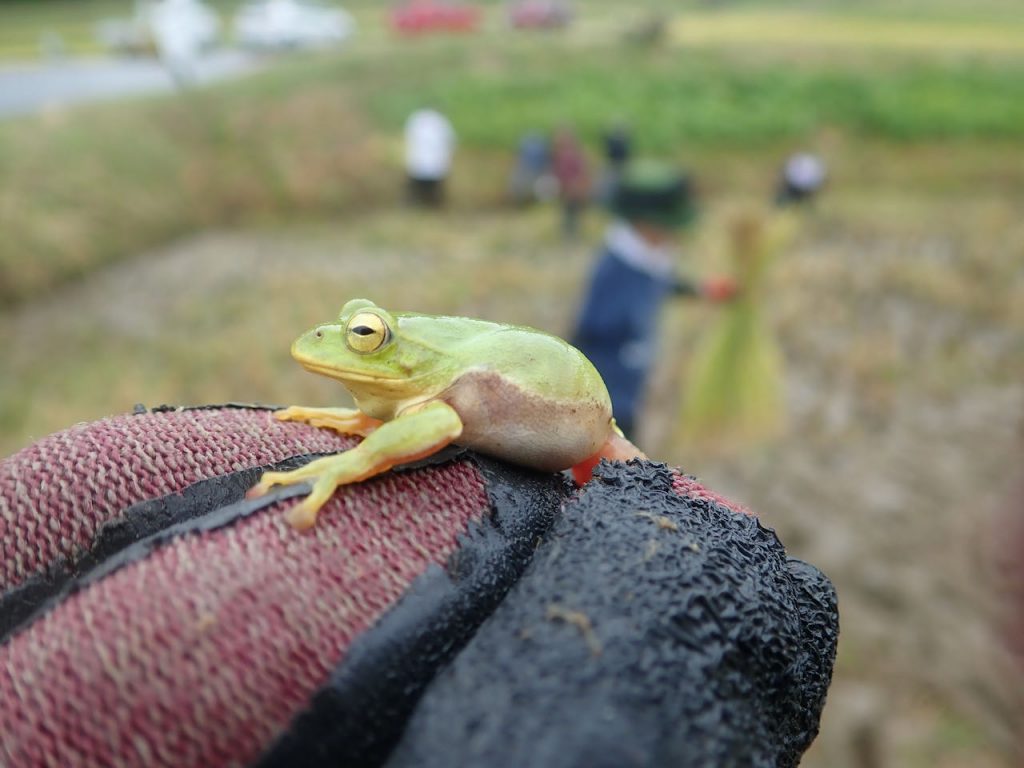
 しばらくするとみなさん作業に慣れ、自分の世界に没入して作業する人、初対面同士で世間話をしながらマイペースで作業する人と様々に稲と向かい合っていました。稲株の間からは緑鮮やかなカエルたち、すぐ目の前には真っ赤なアキアカネが登場します。さらには絶滅危惧種のシナイモツゴも田んぼに水を引き込む升の中から見つかりました。

However in one hour or so, people acquired the ways. Some were just keep cutting and bundling works and some were doing the work taking neighboring persons joyfully. Fresh green colored frogs were jumping out from the ground. Red dragonflies were coming close to us. From a tiny structure to introduce water to the paddy, small fishes were caught and a local biologist explained those as one of endangered species in Japan, called “Shiny-Motsugo.”

絶滅危惧ⅠAのシナイモツゴ。Red databook listed “Shinai-Motsugo”

 26日は雨になる予報だったので、予定を1時間早めて8時30分より作業開始。最初は、曇り空で吹く風も涼しく、手慣れたこともあり作業はどんどん進みます。昼近くに、雨が降り始めました。残りは3割程度。田んぼはどんどんぬかるみ、寒さを感じるようになってきました。最後は参加者全員で一気に刈り取りを進め、何と午後1時過ぎには、全てを刈り取り、はざにかけるまでの作業を終えました。

On Sunday, weather condition totally changed. We started the work one hour earlier. It was cool and comfortable at the beginning. The work went smoother than the day before. Close to the noon, the rain started. The temperature went down, too. At the end, all of us worked hard to finish. Surprisingly we finished all works from cutting, budding and hanging by shortly after 1 pm.

 参加者の間からは「お米1粒1粒がタネであることを考えると、なんだか本当にありがたい。秋の田んぼが黄金に見えるのは幻ではない。お米たちが命をつなぐクライマックスを迎え、キラキラ輝いていたからだと思う」などという、コメントをいただきました。

“I somehow felt appreciation when I thought each of those grains was a ‘seed’ when I faced to those rice. The shining golden rice field might not be illusion. Rice was shining because they were celebrating the final phase to pass the life to the next generation;” a young participant commented.

 このお米は、10日から2週間、天日乾燥させたあとで、お米となっていきます。この無農薬天日乾燥米のおすそ分け、限られた量ですが受け付けています。

The organic rice will be dried for 10 days to 2 weeks. Then husks will be removed and will be ready to eat. Only limited amount are available for interested persons.

オンラインでの立教大学サービスラーニングを支援

 エコプラスは、2021年2月7日から10日まで新潟県南魚沼市で行われた立教大学のサービスラーニング(RSL)プログラムの支援をさせていただきました。

ECOPLUS supported an online “service learning practicum” of Rikkyo university based in Tokyo, on 7 to 10 February, at Minamiuonuma city, Niigata.

 立教大学の通称「雪掘り実習」は、これまでは3泊4日の実習として行われ、除雪活動などを通じて、雪国の地域社会、そして日本社会の現実を学ぶプログラムです。今回は新型コロナウィルスの感染拡大を受け、すべてがオンラインで行われました。

In past years, the program had been conducted as three nights and four days actual program staying in the snowy village, Tochikubo, learning the reality of current Japanese society through volunteer works like snow shoveling. However, because of Covid-19, the program of this year was totally conducted on-line.

 事前に南魚沼市栃窪集落での「雪掘り」活動や地域住民のインタビュー、栃窪小学校の毎日などを動画素材として準備し、それを見た上で、7日からオンラインでの授業が、14人の受講生を対象に行われました。

Students learned the situation of the village with video materials including footage of snow shoveling on the roof, interferes of the locals and introduction of the elementary school in the village with a total of 12 students from 1 to 6 grade. Then, online interactive session was held.

 栃窪小学校では、子どもたちが一年間の学びを、音楽や踊りや劇を組み合わせた発表を行い、それを大学生たちが視聴して質問を交わす展開となりました。

On 8 Feb., the interactive session with the elementary school was held. Kids presented what they learned during the school year with dance and play, then university and elementary students were communicated over the screen.

 また、地域のみなさんのご自宅に担当の高野孝子・同大客員教授がお邪魔してインタビューするなどして、少子高齢化の集落の実態を知り、また集落で取り組んでいる農業の実際を聞きました。

Also TAKANO Takako, an executive director of ECOPLUS and a visiting professor of Rikkyo university, visited community homes holding her laptop computer for the live interviews to offer the students the reality of the live and farming business in the snowy community.

 すべてオンラインで行わざる得ない展開となりましたが、大学生からは、この4日間の実習を通じて新しいものの見方、考え方を学ぶことが出来ました、などというコメントが寄せられていました。

Despite the hard situation by Covid-19, students looked like deepened understandings about the situation of Japanese society and acquired skills how to investigate current situation of the society and the prospect for the sustainable future.

「生きる」ことを問い直す・・・ヤップ島プログラム2020参加者募集(中止しました)

コンビニとスマホ漬けの日常から離れ、サンゴ礁で囲まれた南の島で、人々と暮らす

 石で出来た大きなお金、石貨(せっか)が今でも使われ、太平洋諸島で最も伝統が色濃く残るとされるヤップ島。その自然と深くつながった現地の暮らしに入れていただき、人と自然、人と人、人と社会のつながりやかかわり方について考え、本当の豊かさを見つめ直すプログラムです。

 ココヤシの殻や薪を使って火をおこし、魚やタロイモ、パンの実を調理する。大きなヤシの葉っぱを編んで作るマットで眠る。風のそよぎと虫の声に包まれた中で、現地の人たちと目と目を合わせて会話する。

 スイッチ一つ、クリック一つでものごとが動く日常とは違った、本物の生き方をしてみます。2019年の報告はこちらから

プログラム概要

【日程】2020年8月15日から26日(2021年2月に延期します
【対象】15~22歳程度の健康な男女。身体の障害、国籍は不問。新しいことに取り組み、自分の可能性にチャレンジする意欲を持つ人。
【参加費】26万円程度(渡航運賃、滞在費など。事前準備、個人装備、空港までの旅費、保険料を除く。特段の事情がある人は年内の分割払いの相談にも応じます)
【定員】:8名程度(5月10日締切、先着順、定員に達し次第締め切り)
【プログラムの流れ】
 ・説明会 2月から5月はじめにかけての随時、エコプラス東京事務所や早稲田大学などで
 ・顔見せ会 5月16日(土)午前10時から正午(予定)
 ・事前キャンプ 6月27日、28日…東京近郊でヤップでの生活をイメージしながらキャンプを行います。
 ・素潜り講習会(希望者と首都圏の潜水プールで)7月後半を予定
 ・ヤップ島へ出発!
 ・報告書の作成(9月)と報告会(11月頃)

【申し込み、問い合わせ】
 特定非営利活動法人ECOPLUS info@ecoclub.org
 03-5294-1441  03-5294-1442(fax)
 以下のフォームから連絡を下さい。これまでの報告書などをお送りします。保護者の方からの連絡も遠慮なくこちらからどうぞ。

← 戻る

ご回答をありがとうございました。 ✨