On the weekend of June 21-22, 2025, ECOPLUS conducted a weeding workshop in Minamiuonuma City, Niigata Prefecture, with nine participants ranging from babies to the elderly.
On Saturday, June 21, we visited the highest rice field in the city, located in the Tochikubo Village. The tour began with a visit to a reservoir into which spring water from the mountains flows, and the participants learned how the water travels through the terraced rice paddies one by one.
We also found the bubbling eggs of tree frogs on the branches of a 5-meter-high tree adjacent to the rice paddies.
We also observed the site of mowing, the slope between paddies, which is a significant challenge for rice cultivation in terraced rice paddies. We were amazed to see the huge slope, which was about three times taller than our height.
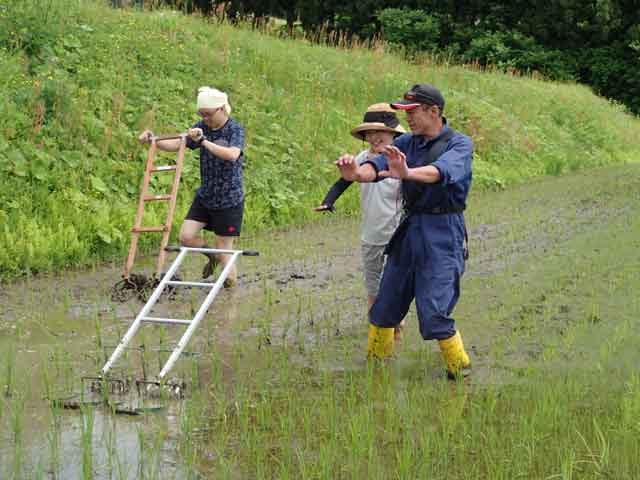
On Sunday, June 22, weeding was done under fine weather, with temperatures exceeding 30 degrees Celsius, but the soil in the rice paddies was slightly cool to the touch. We could clearly see the difference between the temperature of the soil and that of the hot spring-like temperature on the surface.
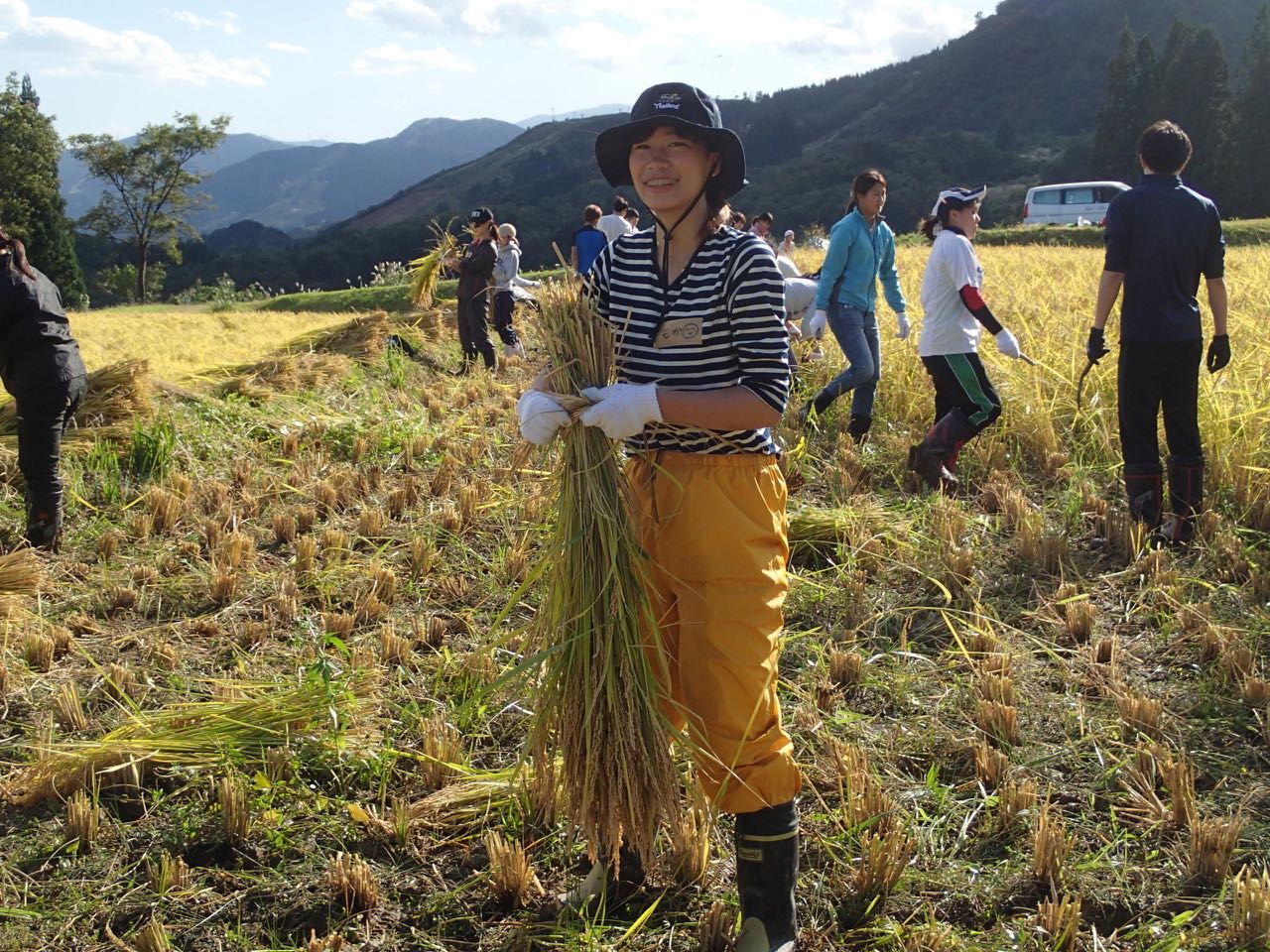
We spent a total of three hours fighting with the weeds that were growing around the roots of the rice seedlings, which had grown to a height of about 30 centimeters. 150 square meters of small rice field was beautifully cleaned. A rice ball lunch was served next to the rice paddy.
In the pesticide-free rice paddies, we were able to see many living creatures, including the Moreton’s damselfly and the red-bellied newt. Both are listed as endangered species 1A in the Kanto Plain and other areas.
Weeding of the pesticide-free rice fields will be necessary one or two more times until around July. They returned home with their voices saying, “I will come back to weed the fields on my own!” Thank you very much.
ECOPLUS conducted the first workshop on rice farming, called “ABC in a rice paddy” on May 25-26, 2019 at Tochikubo village, Niigata Japan. Under the beautiful summer sky, participants from metropolitan area enjoyed works in a rice paddy with songs of birds, cool breeze and lunch next to the paddy.
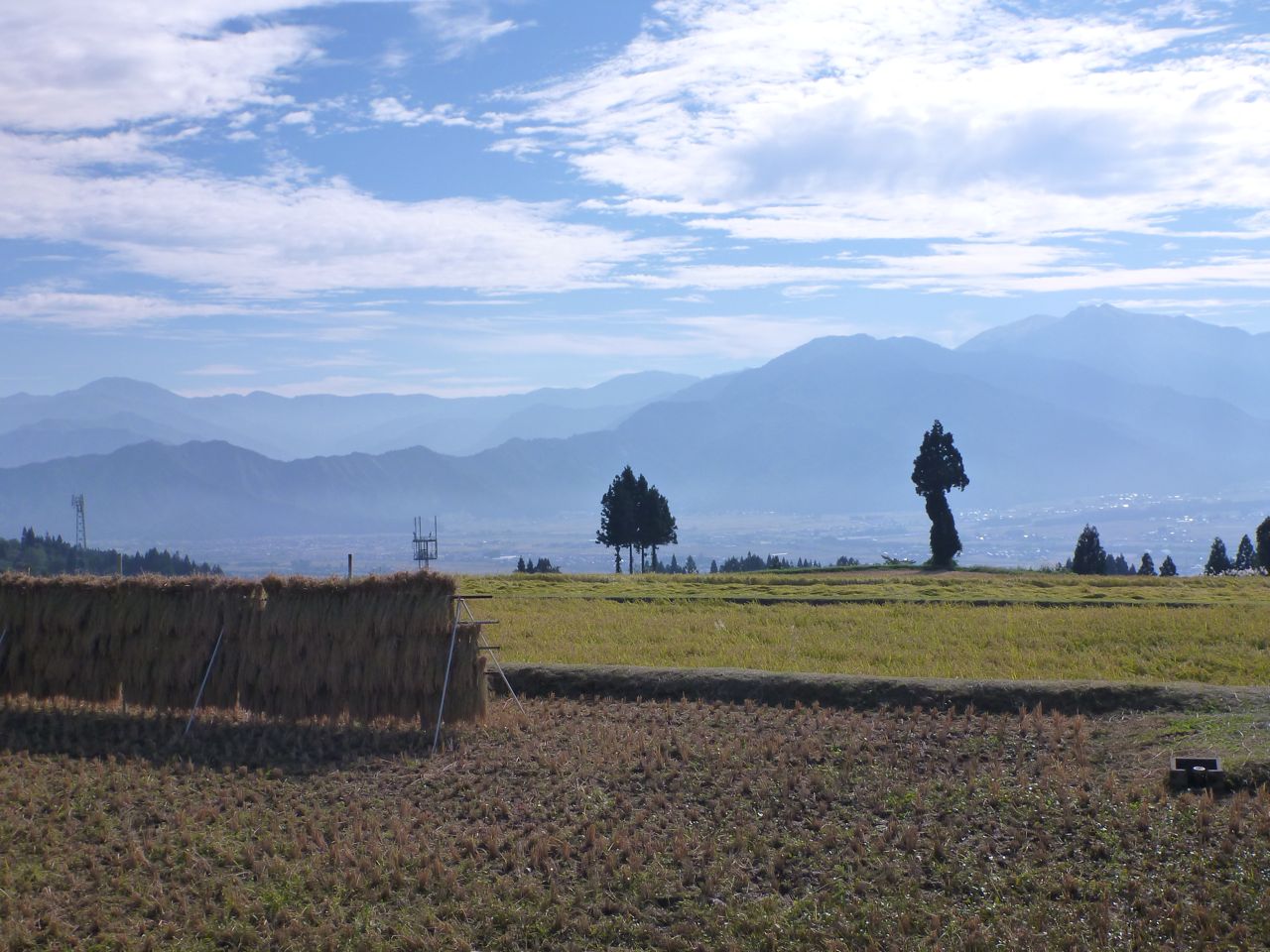
On 25th, the sky was totally blue with any pieces of clouds. So we went up above the village by car and walked an half hour to the top of Mt. Teruyama, which has elevation of 736 meters. We could oversee the ridge of mountains reaching to 2,000 m elevation and the Uonuma basin which is the heartland of the most sought after rice, “Uonuma Koshi-Hikari.”
Snow was still remained under the branches of cider tree. 杉の枝の下は雪がびっしり。
During the walk to the top of Teruyama, we identified several edible plants just next to the path. We also surprised by so many butterflies circling around us. On the way back, we took the over four century old road used by worriers in the battle age in Japan. On that road, snow was still remained and another edible plants can be identified near the road.
On 26th, we concentrated our time for rice planting. The paddy which has been growing rice for 13 years without any chemicals was smoothed prepared by the locals. Rolling a wooden frame of hexagon shape, we set marks on the surface then we planted seedlings in line. At the beginning it was difficult to set the seedlings but with the support from locals, saying set the seedlings not to be floated away and not to push in too deep, participants learned the way shortly.
Many dishes were set on the deck of a small track. 軽トラ食堂。
The planting work was finished in 3 and hard hours and the lunch started. So many dishes like, miso-soup with wild edible plants, rice balls, tempura of another edible plant, called “Yamaudo,” we deeply understood the richness and happiness to live close to the nature. Participants discussed a lot about the relation between nature, food and agriculture during the weekend.
On 26 and 27 May, ECOPLUS conducted “a weekend farming workshop; rice planting” in Tochikubo village in Niigata Japan. Under the limitation of lodging space, we had eight participants from Niigata city and Metropolitan area.
We had water shortage caused by extremely small snow in previous winter in 2016, and low temperature and wet condition in 2017. This year we had enough snow as same as usual years but temperatures went up after March and it melted snow substantially. Farmers are worrying again the shortage of water.
On Saturday, we started planting seedlings in a smaller paddy which has around 800 square meters. Those paddies which have been growing rice without any chemical materials, the area was filled with so many creatures, like tadpoles, dragonflies and butterflies.
Thanks to the strong sunshine, surface of the mud is very warm. We set 4-6 seedlings in one position 1 centimeter under the surface.
One of the participants was came from Thailand but she was from the central part of big city, Bangkok. She and his Japanese husband were so good at planting works although it was the first time for them.
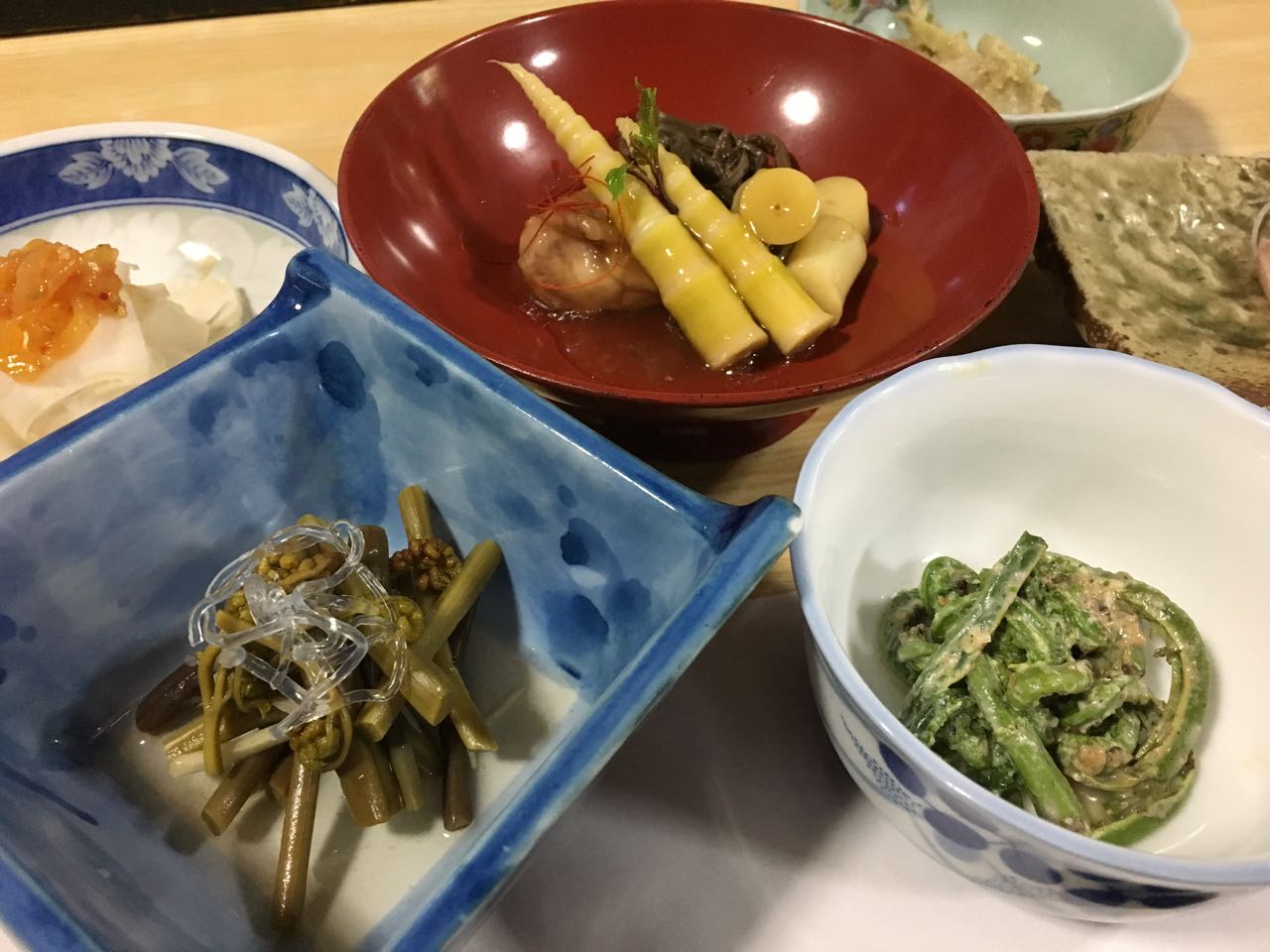
At the dinner so many dishes using wild vegetables just harvested by the chef from their hills were appeared. Some were boiled and mixed with sesame source or vinegar source, some were fried as “Templa”. We enjoyed the gorgeousness of the life in the mountain.
日曜日の作業前、苗を田んぼに運び込む It was also very nice weather on Sunday and one of the participants succeeded to see the beautiful sunrise at 4 o’clock in the morning.
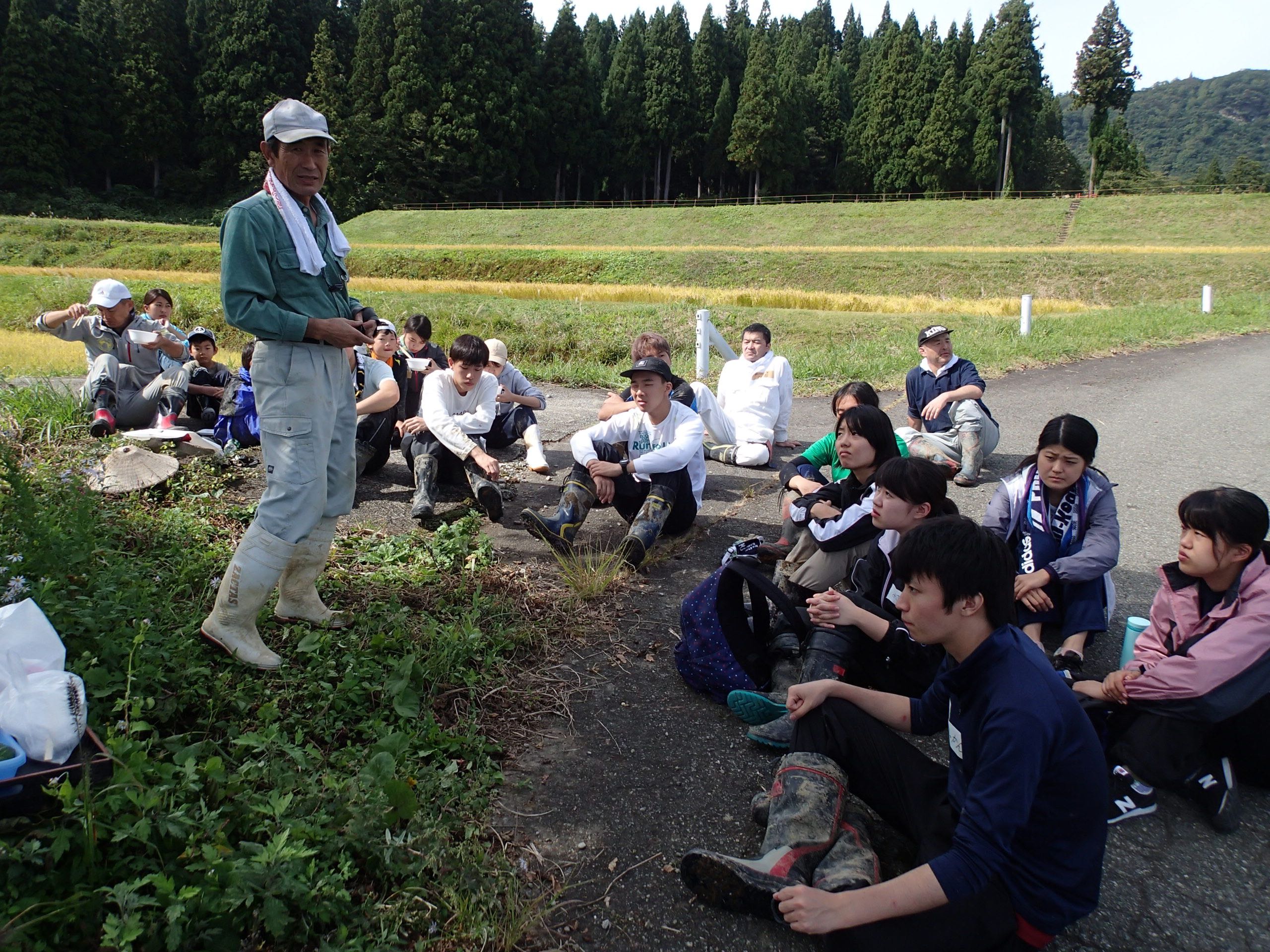
After finishing rice planting using one hour and so, we had open air lecture from Mr. FUEKI Akira, a veteran farmer. He explained that in old days when the paddies were much smaller and narrow, they conducted rice plantings one paddy to next one moving water from upper paddy to lower one. He also taught that normally 20 pesticides, weed killers or other chemicals were used for rice growing in one season but for this totally organic rice paddy he uses no chemicals. Because of this, he needs to weed by hands at least three times before harvest in each paddies.